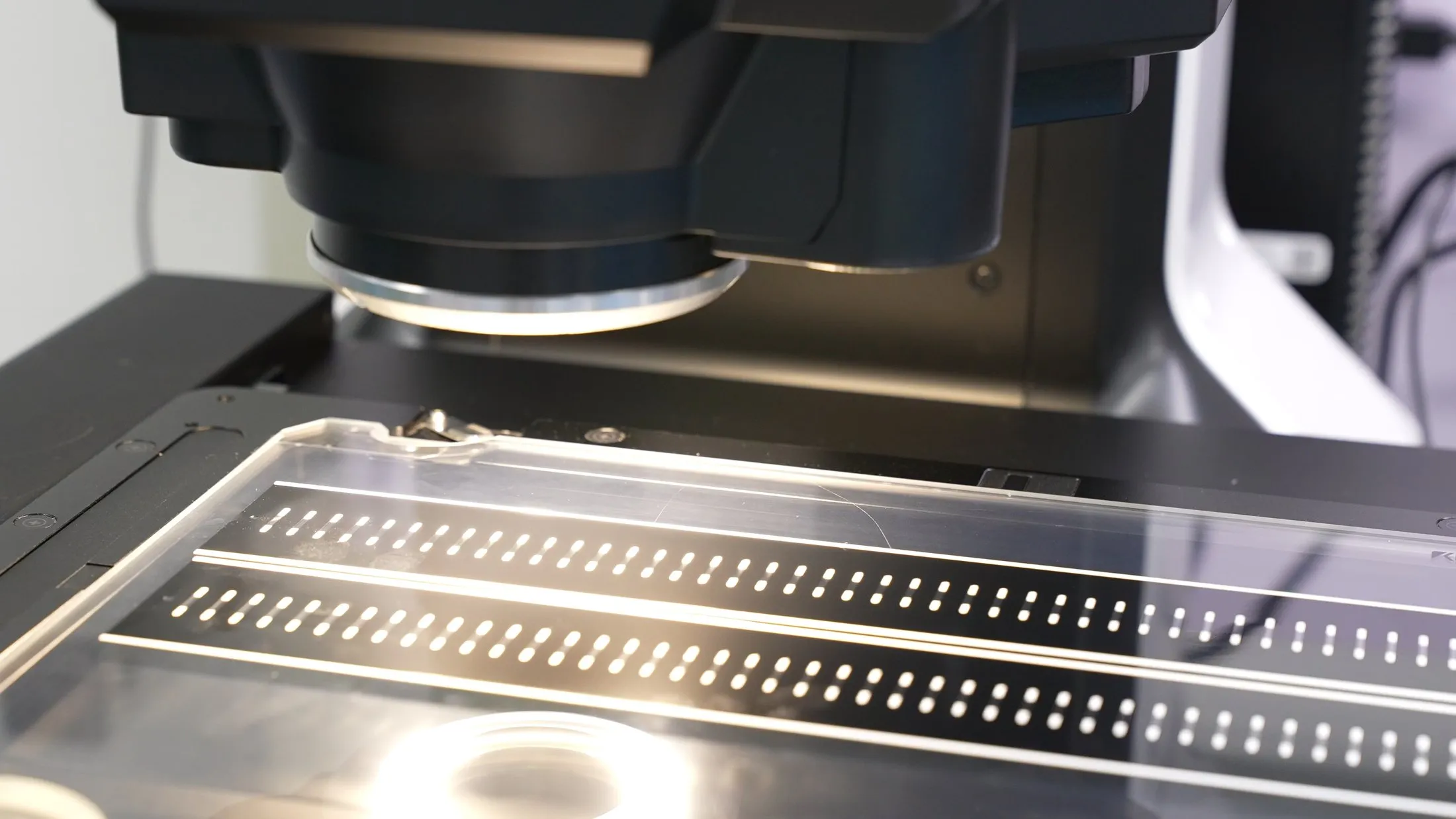
When a glucose strip line drifts out of specification, the investigation usually starts with the enzyme and the electrode. Both are expensive to change and both are heavily documented, so they are the natural suspects. In practice, a large share of unexplained drift traces back to the spacer tape: channel height, adhesive behaviour and dimensional stability after lamination.
This article examines the mechanisms by which the spacer influences an electrochemical reading, and the measurements that reveal it.
Channel Height as a Measurement Variable
In a capillary strip, the sample must fill a defined volume before the reaction reaches steady state. Channel height, together with channel width and length, sets that volume. If height varies by ten percent between strips, the filled volume varies by ten percent, and the current measured at the electrode reflects a different amount of reacted analyte.
The relationship is not linear in practice because fill dynamics and enzyme kinetics interact. A lower channel fills faster, which can reduce the time available for the reagent to wet out; a higher channel fills more slowly and requires a larger drop. Neither extreme is automatically wrong, but both shift the operating point of the assay.
This is why spacer thickness belongs in the strip design input, alongside electrode geometry and reagent formulation, rather than in procurement.
Fill Rate and Sample Volume
Capillary fill rate depends on channel geometry, surface energy and fluid viscosity. The spacer controls two of those three. Height and width set the hydraulic resistance; the spacer edge quality affects how uniformly the channel walls are defined.
The practical consequence is on the patient side. A strip designed around a one microlitre sample that needs two microlitres because the channel ran high will produce an error message rather than a reading, and error messages drive call-centre volume and strip consumption. Device teams sometimes fix fill complaints by adjusting the reagent, when the cheaper correction is a tighter spacer specification.
Adhesive Intrusion and Flow Resistance
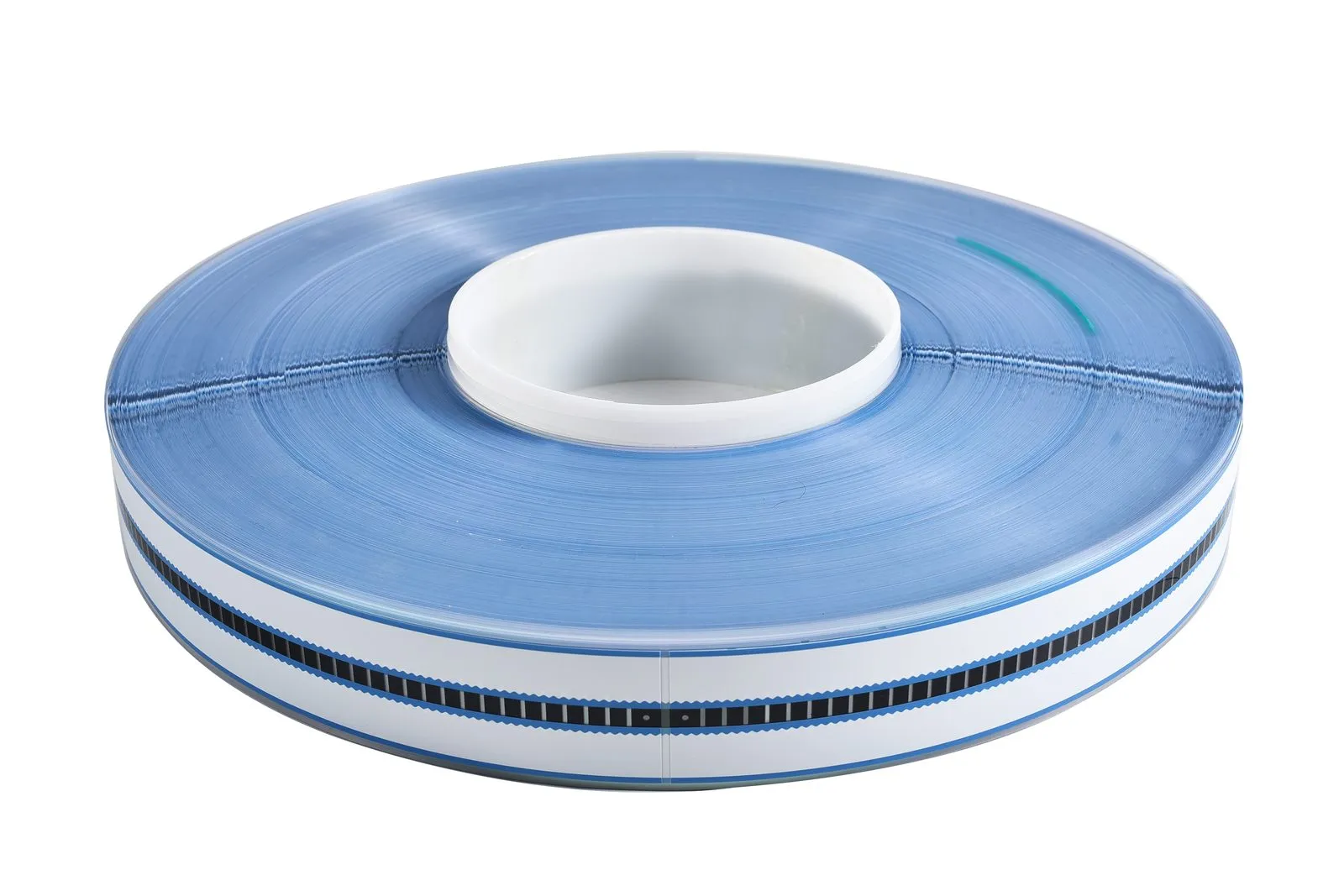
Spacer adhesive is under pressure during lamination. If coat weight is high, or the adhesive is soft enough to cold-flow, a small fillet can form at the channel edge. That fillet reduces the effective channel width and adds surface roughness that blood must wet out.
The result is a strip that fills more slowly than its design predicts, without any visible defect. Fill-time testing is the only reliable way to detect it, because dimensional inspection of the external profile looks correct.
Adhesive chemistry and coat weight are therefore accuracy parameters. An acrylic with good cohesion and a controlled coat weight is a safer choice for a thin channel than a soft adhesive chosen for initial tack.
Deformation After Lamination
Spacer tape is compressed during lamination and again during packaging and storage. Compression changes channel height, and the change is not always uniform across a web. A converter that laminates at high nip pressure can close a channel by several microns in the centre of the web compared with the edges.
The consequence is a strip population with a height distribution rather than a single value. That distribution is the real specification, which is why capability data across the web width matters more than a single measurement at one location.
Storage conditions matter as well. Adhesive carriers can creep under sustained load in warm conditions, and a roll stored on end in a warm warehouse may not behave the same as one from a controlled store.
Bubbles, Venting and Incomplete Fill
A trapped bubble blocks the channel. Bubbles originate in three places: air entrapped during lamination of the spacer, air introduced by an uneven release liner peel, and air drawn in when the sample entry geometry is poorly vented.
The spacer contributes to the first two and interacts with the third. If the spacer edge has a burr or a wavy slit line, the entry gap becomes irregular and venting is compromised. This shows up as intermittent incomplete fill, which is difficult to reproduce in a bench test and easy to see in a production sample of a thousand strips.
The Tolerance Stack Across Three Layers
Channel height is not only spacer thickness. It is the assembled gap between the base and top webs, which includes base web thickness variation, spacer thickness variation and top web flatness, plus the effect of lamination compression and any coating on the top web.
A stack analysis is worth doing explicitly. If the base web is plus or minus 15 microns, the top web plus or minus 10 microns and the spacer plus or minus 10 microns, the assembled height can move by 35 microns before lamination effects. On a 100 micron channel that is a large fraction of the design value.
The practical outcome is that specifying the spacer alone is insufficient. The device team should specify the assembled channel height, and let the converter allocate tolerance across the layers with data.
What to Measure
Four measurements expose spacer-related accuracy issues. Fill time on a controlled sample, recorded across a lot; functional CV across a strip population at a fixed glucose level; hematocrit sensitivity, because channel height changes the balance between flow and reaction; and dimensional inspection of channel width at multiple points along the strip.
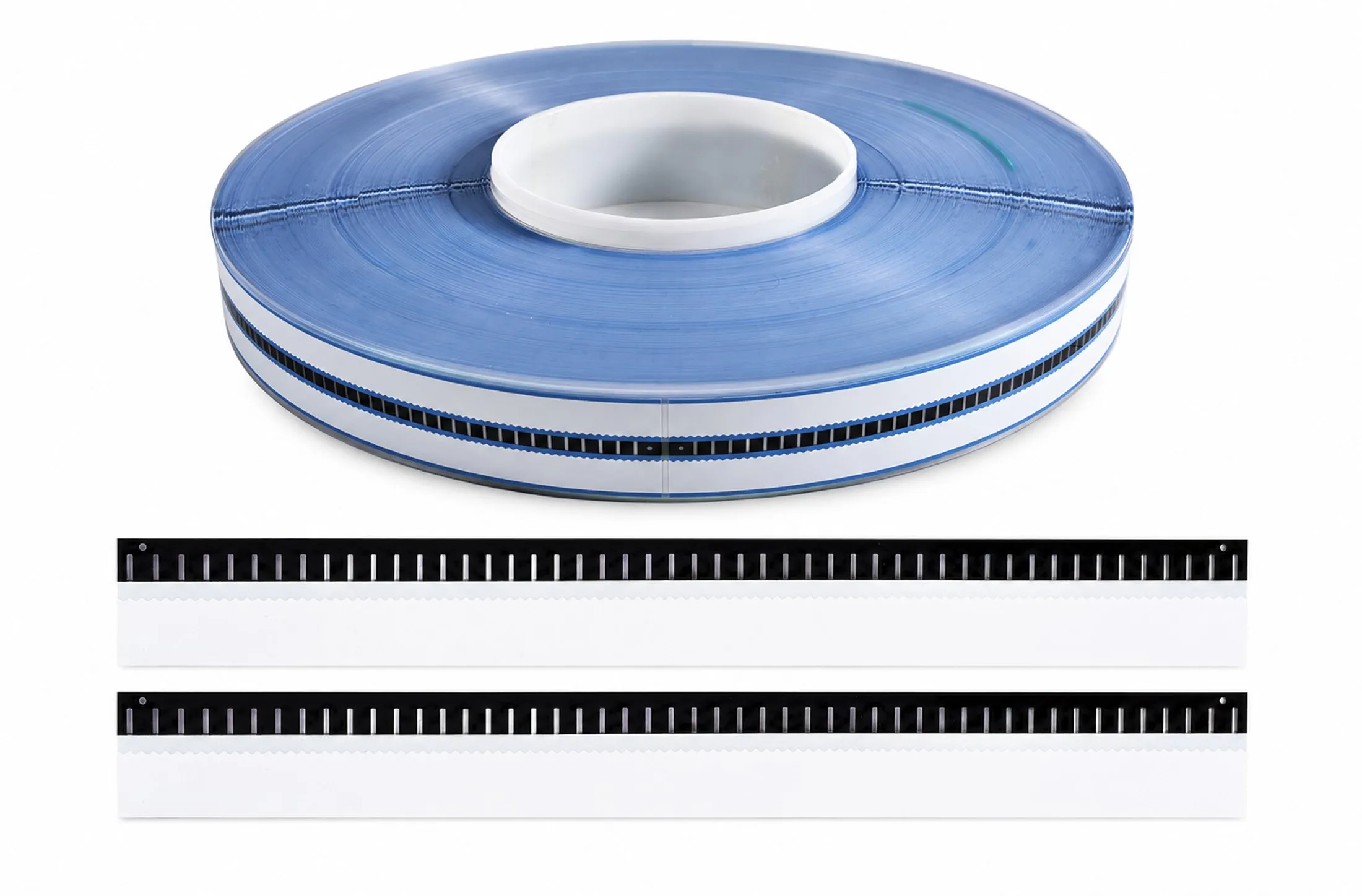
Pair those with supplier-side data: thickness across the web, coat weight across the web, slit width and edge quality, and registration of the channel to the electrode pattern. When a strip drift appears, this combination usually identifies which layer moved.
Frequently Asked Questions
Can spacer tape alone cause a strip to fail accuracy specification?
Yes. Channel height changes fill volume and flow resistance, and adhesive intrusion narrows the channel. Both shift the electrochemical response without any visible defect in the external profile.
What is a reasonable assembled channel height tolerance?
It depends on the assay, but the tolerance should be allocated across base web, spacer and top web rather than assigned entirely to the spacer. Total assembled variation of a few percent of channel height is a realistic target.
How is adhesive intrusion detected?
Fill-time testing on a defined sample is the most reliable method. Dimensional inspection of the external profile will not reveal an internal fillet.
Why does hematocrit sensitivity change with channel height?
Channel height alters the balance between capillary flow and reaction kinetics, so the same hematocrit produces a different response. Lower channels tend to be more sensitive to viscosity-driven effects.
Does lamination pressure change channel height?
Yes. Nip pressure compresses the spacer, and uneven pressure across the web creates a height distribution rather than a single value. Capability data across the web width is the correct specification.
What supplier data should be requested for accuracy-critical strips?
Thickness and coat weight measured across the web, slit width and edge quality, channel-to-electrode registration capability, and change notification covering adhesive, carrier and liner.
Conclusion
Spacer tape moves accuracy through geometry, adhesive behaviour and assembled tolerance. Treating it as a mechanical component leaves the mechanism invisible until functional yield drops. Specifying channel height as an assembled dimension and demanding capability data from the tape supplier closes that gap.
Leetoya supplies BGM spacer tape with controlled thickness and high-precision slitting, and can support stack analysis with channel dimensions. See BGM adhesive components and the spacer tape manufacturing guide.
Get engineering support. Share the assembled channel target and current fill-time data, and we will review thickness allocation across the strip stack. Contact our engineers.