Table of Contents
- What Counts as CGM Patch Failure?
- Why CGM Adhesive Patches Lift, Peel, or Detach Early
- Early Warning Signs That a Patch Is About to Fail
- How to Make a CGM Adhesive Patch Last the Full Wear Cycle
- How Custom Patch Engineering Reduces Failure Rates
- 2026 Hot Topics in CGM Adhesion
- FAQ: CGM Patch Lifting, Irritation, and Wear Time
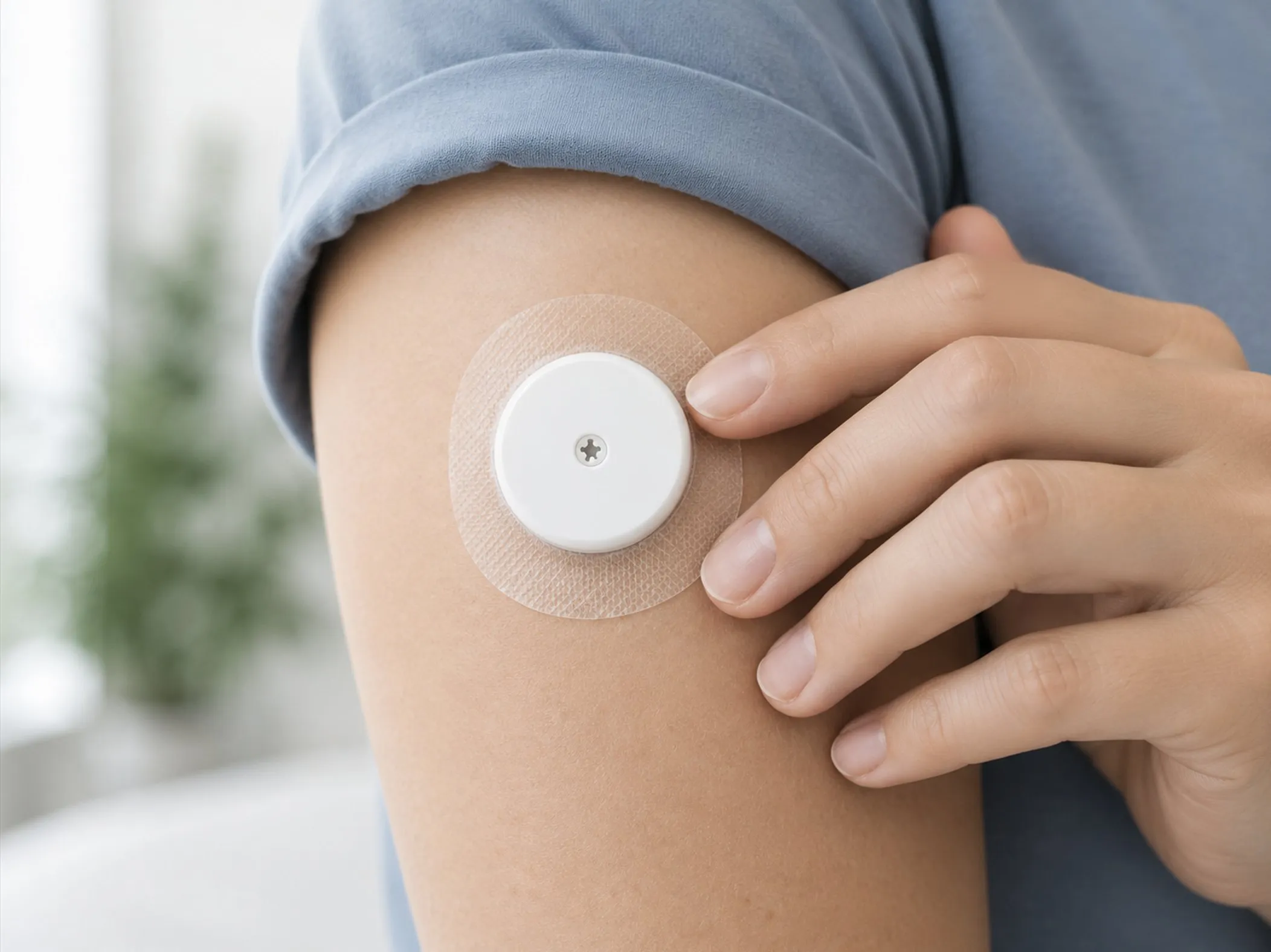
CGM adhesive patch failure — edge lifting, partial peel-off, redness underneath, or complete detachment before the sensor's scheduled replacement — is the single most common complaint reported by continuous glucose monitor (CGM) users and one of the most expensive quality issues faced by wearable device makers. A patch that fails on day three of a fourteen-day wear window forces early sensor replacement, gaps in glucose data, and avoidable cost for patients and payers. Whether you are a clinician advising patients, a brand sourcing custom CGM adhesive patches, or an engineer designing the next-generation sensor housing, this guide explains why patches fail, how to recognize failure early, and what both users and manufacturers can do to extend reliable wear time.
What Counts as CGM Patch Failure?
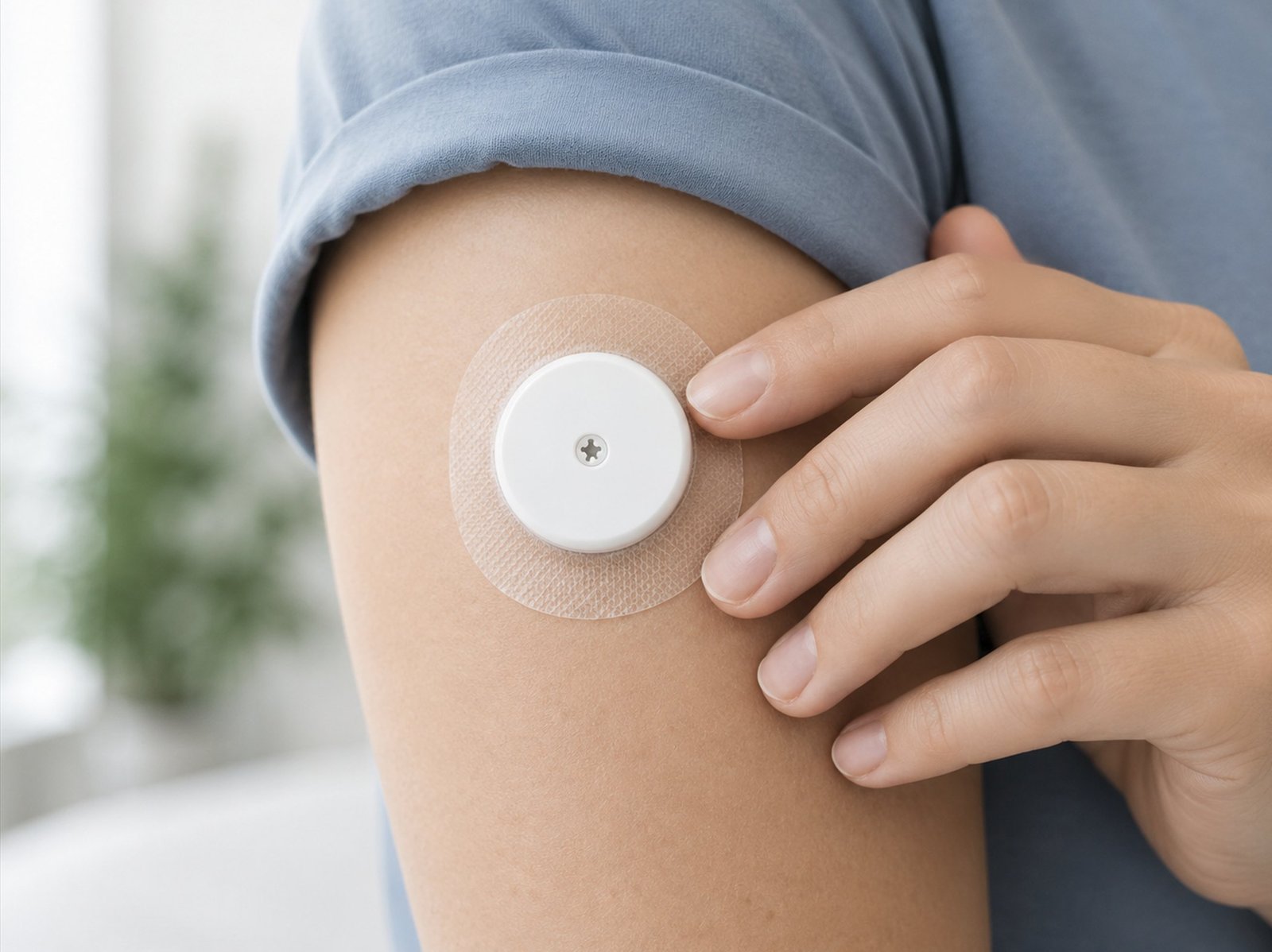
Not every imperfect patch edge means a clinical failure, but in manufacturing and quality terms, CGM patch failure falls into four measurable categories:
- Adhesive detachment: any part of the patch separates from the skin before the intended wear period, including corner lift, edge curl, half peel-off, or full detachment.
- Sensor misalignment: the patch shifts the sensor or transmitter housing, altering the sensor-to-skin distance and compromising glucose reading stability.
- Skin reaction: contact dermatitis, itching, burning, or persistent redness that forces early removal even when adhesion itself holds.
- Barrier breach: water, sweat, or lotion seeps under the patch, causing maceration, adhesive softening, or bacterial growth at the skin interface.
For device manufacturers, failure is tracked as a detachment or skin-reaction rate per wear cycle, measured against the label claim (for example, a 10-day or 14-day rated wear). Patches are evaluated with peel adhesion (ASTM D3330 / PSTC-101), shear holding (ASTM D3654 / PSTC-107), and dynamic water-resistance testing before release. You can read how these systems are specified in our CGM adhesive patch manufacturer sourcing guide.
Why CGM Adhesive Patches Lift, Peel, or Detach Early
Most failures are not caused by a single weak adhesive. They come from the interaction between the skin, the environment, the application method, and the patch's mechanical design.
1. Poor Skin Preparation Before Application
Oil, residual lotion, dead skin cells, sweat, and body hair create a barrier between the pressure-sensitive adhesive (PSA) and the stratum corneum. On an unprepared surface, the adhesive bonds to the oil film rather than the skin, and the bond releases as that film shifts. Cleaning with an alcohol wipe, drying completely, and avoiding moisturizer near the application site for several hours beforehand materially increases initial tack.
2. Sweat, Humidity, and Water Exposure
Continuous perspiration during exercise, hot weather, or showering softens acrylic adhesive and lifts the edge where moisture migrates underneath. Non-breathable film backings trap that moisture against the skin, producing maceration and further weakening the bond. Backing porosity and moisture vapor transmission rate (MVTR) are therefore as important as peel strength; the engineering trade-offs are covered in our resource on factors affecting adhesive performance.
3. Friction From Clothing, Showers, and Sleep Position
Elastic waistbands, backpack straps, bed sheets, and towel drying repeatedly abrade the patch perimeter. Because adhesive bonds are weakest at the cut edge, repeated friction starts as a small corner lift and propagates across the patch over days. A rounded, reinforced edge profile distributes that stress better than sharp corners that catch on fabric.
4. Body Movement, Skin Stretch, and Swelling
The arm and abdomen stretch during reaching, bending, and weight fluctuation. A stiff, inelastic backing cannot follow that movement, so the adhesive delaminates from the skin while remaining intact on the film. A conformable nonwoven or foam backing moves with the skin instead of peeling against it.
5. Adhesive Age, Oxidation, and Storage
Pressure-sensitive adhesives slowly lose tack as they oxidize and absorb moisture in storage. Patches past their shelf life, stored in direct heat, or removed from sealed liners too early show noticeably lower initial adhesion. Proper cold-chain-free dry storage and liner removal immediately before application preserve performance.
6. Hair Density and Skin Type
Coarse hair prevents full skin contact and creates channels for moisture. Oily or very dry skin, eczema-prone areas, and scar tissue all bond differently. This is why a one-size adhesive rarely performs equally across all users; skin-friendly medical adhesives are formulated to balance strong bond with low irritation across skin types.
7. Application Technique and Timing
Applying the patch over the sensor without pressing from the center outward, smoothing the edges, or warming the adhesive after application leaves air pockets and incomplete contact. The adhesive reaches its strongest bond roughly 20 to 30 minutes after application; applying immediately before a shower or workout wastes that build-up window.
8. Housing Stress and Lever Effect
The transmitter or sensor housing acts as a lever: any snag on the raised device transfers force to the patch edge. A patch that only surrounds the sensor center transfers that lever force directly to the bond, while a larger, shaped patch that anchors beyond the housing spreads the load. Material choices for this structure are detailed in materials used in CGM patches.
Early Warning Signs That a Patch Is About to Fail
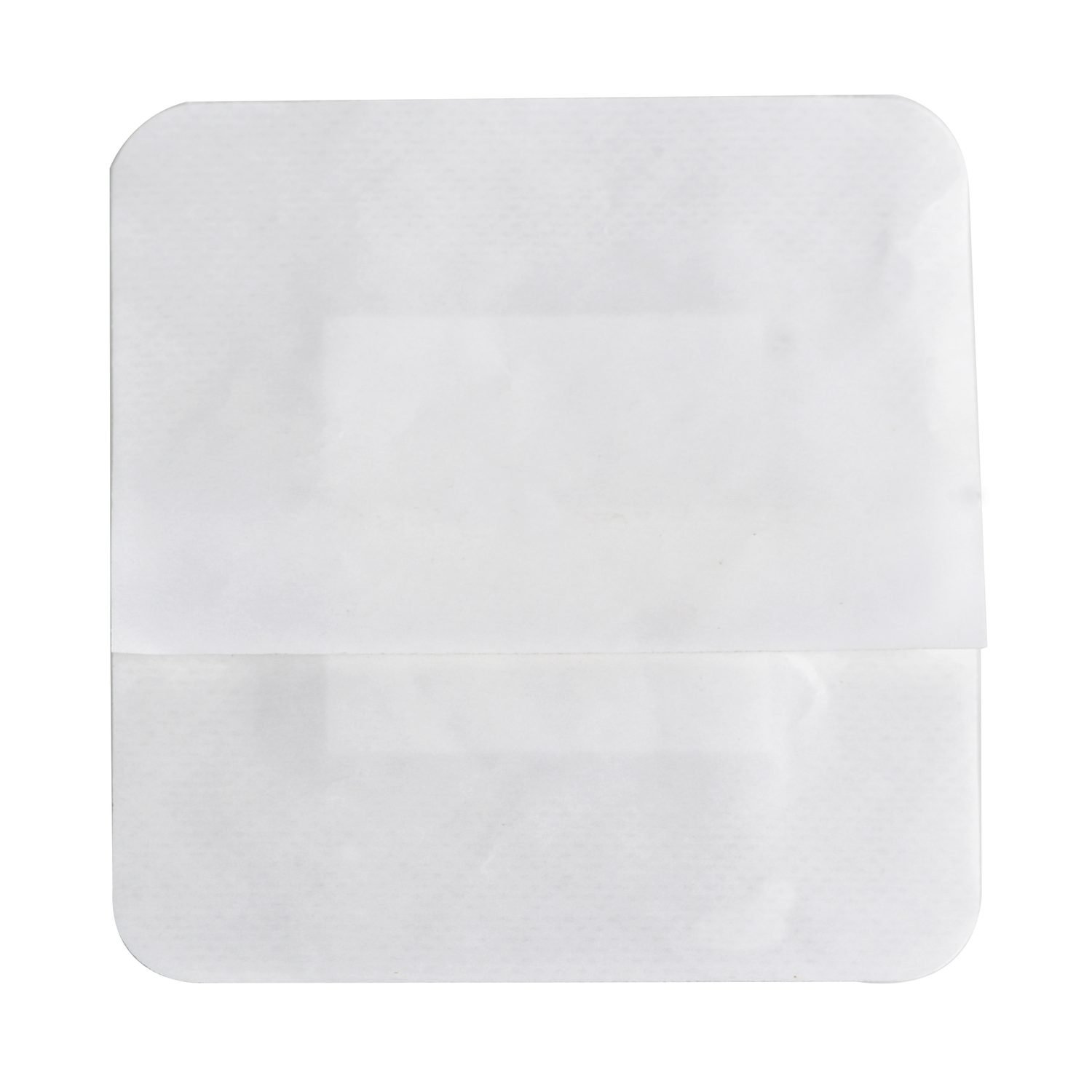
Users who recognize these signs early can apply an overpatch or replace before total detachment, preserving data continuity:
- A corner or edge lifts more than a few millimeters after a shower or workout.
- The patch feels warm, itchy, or produces a visible red ring that spreads outward.
- Moisture or a cloudy bubble appears between the film and the skin.
- The sensor housing rocks or shifts when touched instead of sitting flush.
- The edge develops a white, softened, or rolled appearance from water exposure.
- Glucose readings become noisier or drift after the patch shifts.
How to Make a CGM Adhesive Patch Last the Full Wear Cycle
The table below pairs the most common failure conditions with the practical mitigation used by experienced wearers and engineered into premium patches.
| Failure Condition | User Action | Manufacturer Design Control |
|---|---|---|
| Oily / dirty skin | Clean and dry site; avoid lotion before application | Formulate PSA with good skin wetting; include application instructions |
| Sweat and humidity | Apply after shower, allow bond to build up | High-MVTR breathable nonwoven or perforated film |
| Edge friction | Protect site from straps; use a secondary overpatch | Rounded corners, reinforced border, larger anchor footprint |
| Skin stretch and movement | Rotate sites; avoid over-tight clothing | Conformable foam / nonwoven that follows skin |
| Water immersion | Pat dry, do not rub; avoid hot baths | Water-resistant adhesive system and sealed edge construction |
| Skin irritation | Rotate sites; stop use on reaction | Hypoallergenic acrylic or gentle silicone; test per skin-compatibility standards |
| Adhesive aging | Use before expiry; store away from heat | Stable formulation, sealed liner, dated lot traceability |
Brands choosing an adhesive system should also review the broader framework in our guide to wearable medical device adhesive design, which covers layering, breathability, and validation testing.
How Custom Patch Engineering Reduces Failure Rates
Commodity patches use a generic shape and a single adhesive. Custom-converted patches reduce failure through decisions made at the engineering stage:
- Backing selection: nonwoven for breathability and conformability, perforated film for water resistance, or thin foam for cushioning over the housing.
- Adhesive matching: acrylic for a firm, long-wear bond; silicone for gentle, repositionable removal on sensitive skin — compare options in selecting medical adhesives for wearable devices.
- Geometry: scalloped or rounded edges, a center cutout matched to the housing, and extended wings that anchor away from the lever point.
- Liner and die precision: clean kiss-cut edges without adhesive bleed, consistent thickness, and easy-peel liner tabs for repeatable application.
- Validation: peel, shear, water immersion, and aging testing under an ISO 13485 cleanroom converting process before mass production.
Brands can order a validated custom CGM adhesive patch product or develop a bespoke shape and material stack from a drawing; the full business context lives on our diabetes monitoring application page.
2026 Hot Topics in CGM Adhesion
- Fourteen-day and extended-wear labels: as sensor wear windows lengthen from 7 to 10 to 14 days, adhesives must maintain bond without irritation across a full fortnight of sweat, showering, and movement.
- Skin-first, hypoallergenic formulations: consumers increasingly reject redness and adhesive trauma, pushing gentle silicone and low-sensitization acrylic systems into mainstream patches.
- Sustainable backings: recyclable and lower-plastic films are being tested without sacrificing breathability or water resistance.
- Activity-specific patches: swim, endurance-sport, and pediatric variants are emerging, each optimized for a different moisture and friction profile.
- Data-driven failure tracking: connected sensors pair detachment events with environmental data, helping brands target the exact design variable driving returns.
- Multilayer comfort stacks: combining a cushioned foam center with a high-tack edge ring balances comfort against the housing with a secure perimeter seal.
FAQ: CGM Patch Lifting, Irritation, and Wear Time
Why does my CGM patch lift at the edges after one shower?
Hot water and soap soften the adhesive and migrate under the edge. Pat dry rather than rubbing, ensure the skin was fully clean and dry before application, and choose a water-resistant, breathable patch with rounded edges for humid environments.
How long should a CGM adhesive patch actually last?
A well-applied, validated patch should match the sensor's labeled wear window — commonly 7 to 14 days depending on the system. Early lifting before that window usually points to skin preparation, moisture, friction, or a mismatched adhesive rather than normal wear.
What is the difference between an overpatch and the sensor's base adhesive?
The base adhesive holds the sensor to the skin; an overpatch is a secondary protective layer applied over the existing patch to seal lifted edges and block water and friction. Overpatches rescue an otherwise healthy sensor but do not repair a failed bond underneath.
Can a lifted CGM patch cause inaccurate glucose readings?
Yes. When the patch shifts the sensor housing or changes the sensor-to-skin distance, interstitial fluid sampling can become unstable and readings may drift or grow noisy. A repositioned or replaced patch restores consistent contact.
Which adhesive is better for sensitive skin, acrylic or silicone?
Silicone adhesives tend to cause less sensitization and remove more gently with less skin trauma, while acrylic adhesives generally offer a firmer, longer-wear bond. The choice depends on wear duration, skin type, and removal frequency; our comparison guidance on medical adhesives explains the trade-offs in detail.
Do custom patches really reduce failure compared with generic ones?
Custom-converted patches match the backing, adhesive, geometry, and edge construction to the specific housing and user profile, which directly targets the most common failure modes. Generic one-size patches cannot optimize all four variables at once.
Leetoya converts validated custom CGM adhesive patches in an ISO 13485 cleanroom, with material selection, die cutting, and lot traceability built into every batch. Learn about our quality commitment or request a sample and engineering review for your patch design.