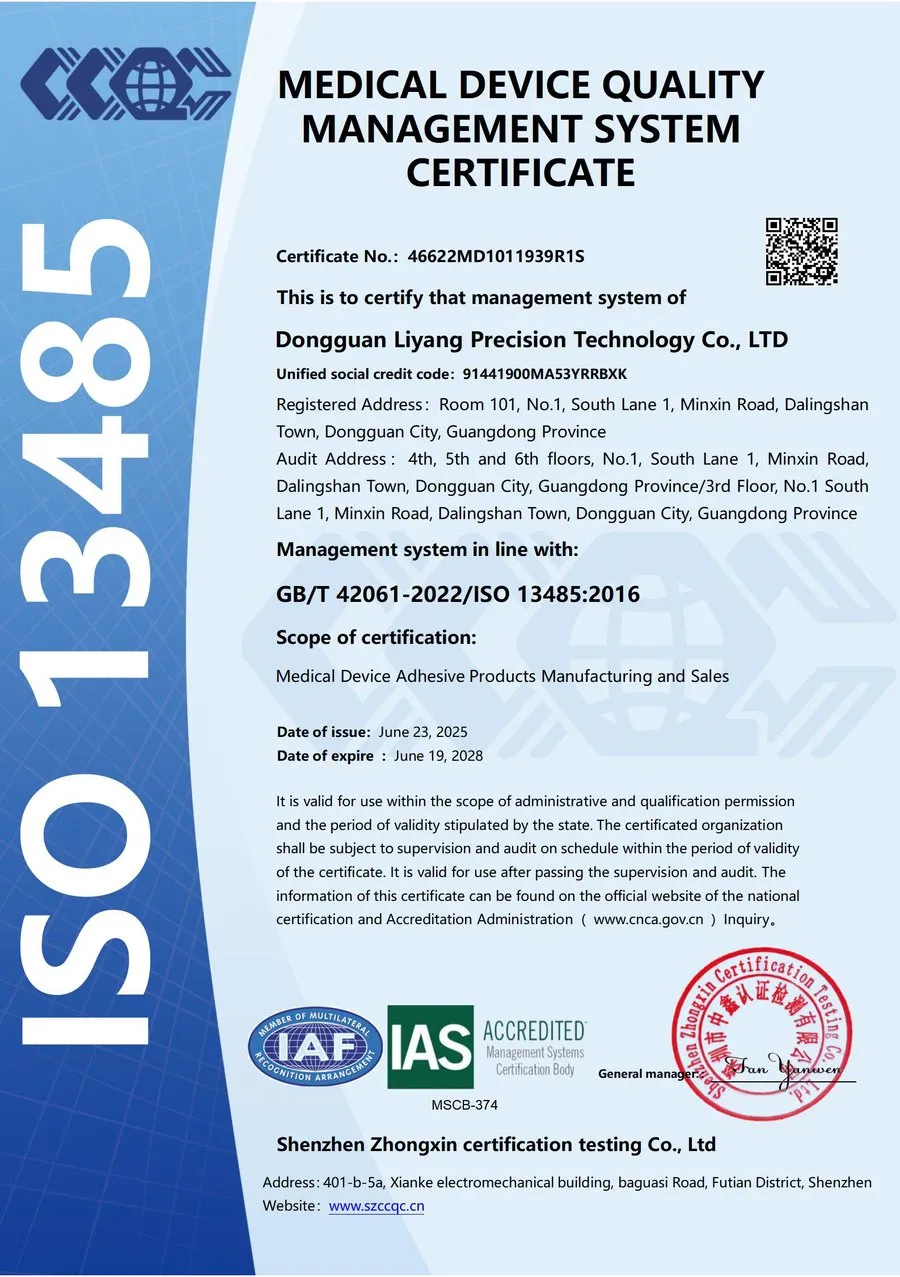
For medical device manufacturers choosing a converting partner, ISO 13485 medical converting is not a certificate to collect—it is the operating backbone that keeps adhesive components, diagnostic layers and wearable fixation parts safe, consistent and traceable from raw roll to sealed pouch. This guide explains how an ISO 13485-aligned quality management system (QMS) works together with an ISO Class 7 (Class 10,000) cleanroom to control contamination, preserve batch traceability and support regulatory submissions for devices such as CGM patches, BGM components and wearable pump fixation. We map the QMS controls buyers should ask about, show how cleanroom classification feeds those controls, and outline what to verify during supplier audits.
Table of Contents
- Why Quality Management Is Critical for Medical Converting
- What ISO 13485 Requires in a Converting Environment
- How an ISO Class 7 Cleanroom Controls Contamination
- Mapping ISO 13485 Elements to Converting Controls
- Traceability, Change Control and CAPA in Production
- Supporting Certifications: ISO 9001, 14001 and 45001
- Why These Standards Matter for Your Device Supply Chain
- Frequently Asked Questions
Why Quality Management Is Critical for Medical Converting
Converting turns thin films, pressure-sensitive adhesives, nonwoven carriers and release liners into finished components that sit against patient skin or inside a diagnostic strip. A missed registration, a contaminated liner, an undocumented adhesive lot or an unapproved artwork revision can compromise adhesion, signal accuracy, skin safety or device shelf life. Unlike a generic packaging supplier, a medical converter becomes part of the finished device's bill of materials, so its controls must be demonstrable to your quality team, notified bodies and clinical reviewers.
Scale raises the stakes further. A production line running millions of units per year multiplies the cost of a single quality escape, which is why quality cannot depend on end-of-line inspection alone. Controls have to be built into the process: qualified materials, validated methods, controlled environments, documented inspections and a closed-loop response to every nonconformance. At Leetoya, our ISO 13485 QMS supports output such as 40M+ CGM patches per year and 5B+ BGM components per year, and the same discipline applies to smaller wearable and diagnostic runs. Buyers evaluating our diagnostic devices programs often ask exactly how these controls are exercised on their own component family.
What ISO 13485 Requires in a Converting Environment
ISO 13485 is the medical-device-specific QMS standard. It organizes quality around risk: the device and its manufacturing environment must be planned, documented, controlled and reviewed so that outputs consistently meet specified requirements and applicable regulatory obligations. For a converter, that means the standard reaches far beyond a final inspection checkpoint.
Core requirements that appear on the converting floor include:
- Document control: specifications, artwork, tooling drawings, work instructions and inspection criteria are approved, versioned, distributed and retired in a controlled way.
- Traceability and records: raw material lots, converting runs, inspection results, packaging records and retained samples are linked so any shipped component can be traced backward and forward.
- Supplier control: adhesive, film, nonwoven and liner suppliers are qualified, monitored and re-evaluated rather than switched casually.
- Process validation: die cutting, lamination, slitting, printing and assembly steps are validated or verified before regular production release.
- Training and competence: operators running converting and inspection stations carry documented qualifications.
- CAPA: nonconformances feed corrective and preventive action with root-cause analysis and effectiveness checks.
In practice, a converting QMS turns each production order into a controlled record: which material lots entered the line, which operator ran it, which inspection criteria were applied, which pouch it was packed into, and what remains on file for traceability.
How an ISO Class 7 Cleanroom Controls Contamination
Even the strongest adhesive and the cleanest die geometry fail if particles, lint or skin flakes land between layers during converting. That is why cleanroom converting is planned as a controlled zone rather than a clean-looking corner of a factory. Leetoya operates an ISO Class 7 (Class 10,000) cleanroom environment for sensitive medical components, where air quality, gowning, material flow and equipment hygiene are managed to keep particulate and fiber burden below the levels that could affect skin-contact adhesives or diagnostic films.
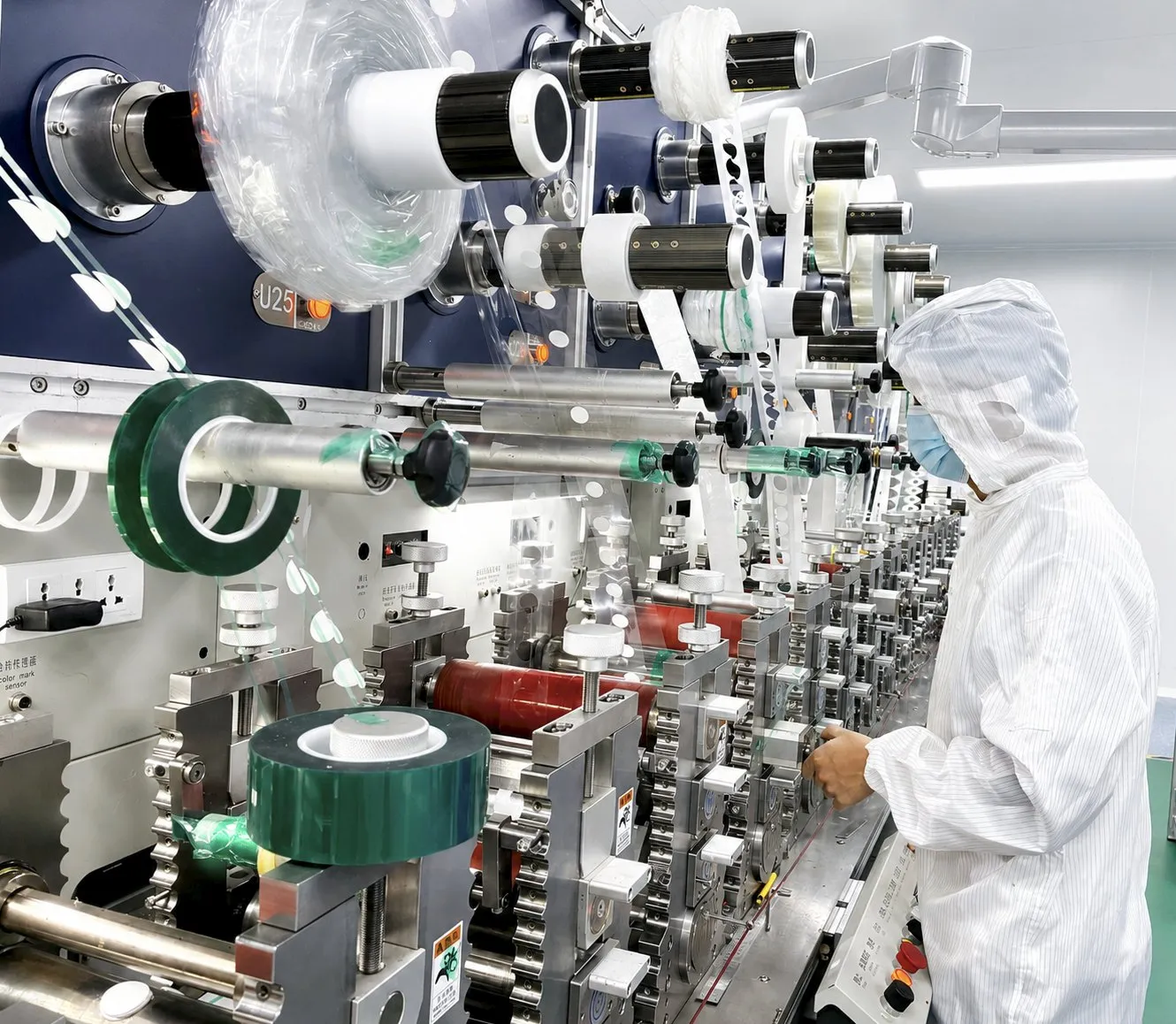
Contamination control in a Class 7 medical converting setting rests on several layers:
- Filtered, pressurized air: the controlled area maintains a cleaner environment than surrounding production space so uncontrolled particles do not migrate inward.
- Gowning and people control: operators wear appropriate cleanroom garments and follow entry and exit procedures, because people are the largest source of particles in most controlled zones.
- Dedicated equipment and material flow: materials enter through controlled staging, liners and films are handled to avoid lint transfer, and equipment is maintained and cleaned on a scheduled basis.
- Environmental monitoring: monitoring data is reviewed as part of the quality system, and excursions trigger investigation rather than waiting for a customer complaint.
Cleanroom classification describes the environment; the QMS describes how that environment is operated, recorded and improved. The two work as one system.
Mapping ISO 13485 Elements to Converting Controls
The table below maps common ISO 13485 QMS elements to the concrete controls buyers should expect from a medical converting partner.
| ISO 13485 QMS element | What it covers | Converting control in practice |
|---|---|---|
| Document control | Approved specifications, artwork, drawings and work instructions | Controlled part numbers, versioned die and printing artwork, signed-off production procedures available at the station |
| Traceability | Links between material lots, production runs and shipped units | Batch travelers recording adhesive, film and liner lots, run parameters, operator and inspection records; retained samples per batch |
| CAPA | Nonconformance handling, root cause and prevention | Nonconformance logs for misregistration, edge defects or liner issues; corrective actions tracked to closure and effectiveness review |
| Cleanroom and contamination control | Controlled production environment for skin-contact and diagnostic parts | ISO Class 7 (Class 10,000) zone, gowning rules, material staging, scheduled cleaning and environmental monitoring |
| Supplier control | Qualification and monitoring of incoming materials | Qualified suppliers for acrylic and silicone adhesives, hydrocolloids, TPU films, nonwovens, foams, PET diagnostic materials and liners; incoming inspection records |
| Inspection and release | Verification that components meet print, geometry and adhesion criteria | In-process checks plus automated optical inspection (AOI) and optical inspection stations before release |
Traceability, Change Control and CAPA in Production
Traceability is the control buyers most often ask about after an audit. A robust genealogy record lets quality teams answer three questions quickly: which raw material lots went into a specific shipped batch, which production line and settings made it, and which customers received components from that run. Records cover adhesive lot number, film and liner batches, converting run, inspection outcomes, winding or rewinding details, and pouch or carton packaging. When packaging and assembly steps such as welding, bagging, counting and rewinding are performed in-house, those records stay in one controlled system rather than being split across subcontractors.
Change control ensures that nothing silent moves into production. A switch of adhesive supplier, liner grade, die geometry, artwork revision or processing parameter is assessed for risk against the device's requirements, validated where needed, approved through the quality process, and documented before implementation. Old drawings and artworks are withdrawn so the floor cannot work from a superseded version.
CAPA closes the loop on anything that goes wrong. A defect found at AOI, at customer inspection or in the field is logged with its context; the team identifies root cause; corrective actions stop recurrence; preventive actions look for the same risk in related products; and the action is checked for effectiveness before it is closed. This is how a quality system stops being a binder of policies and starts protecting the supply chain day to day.
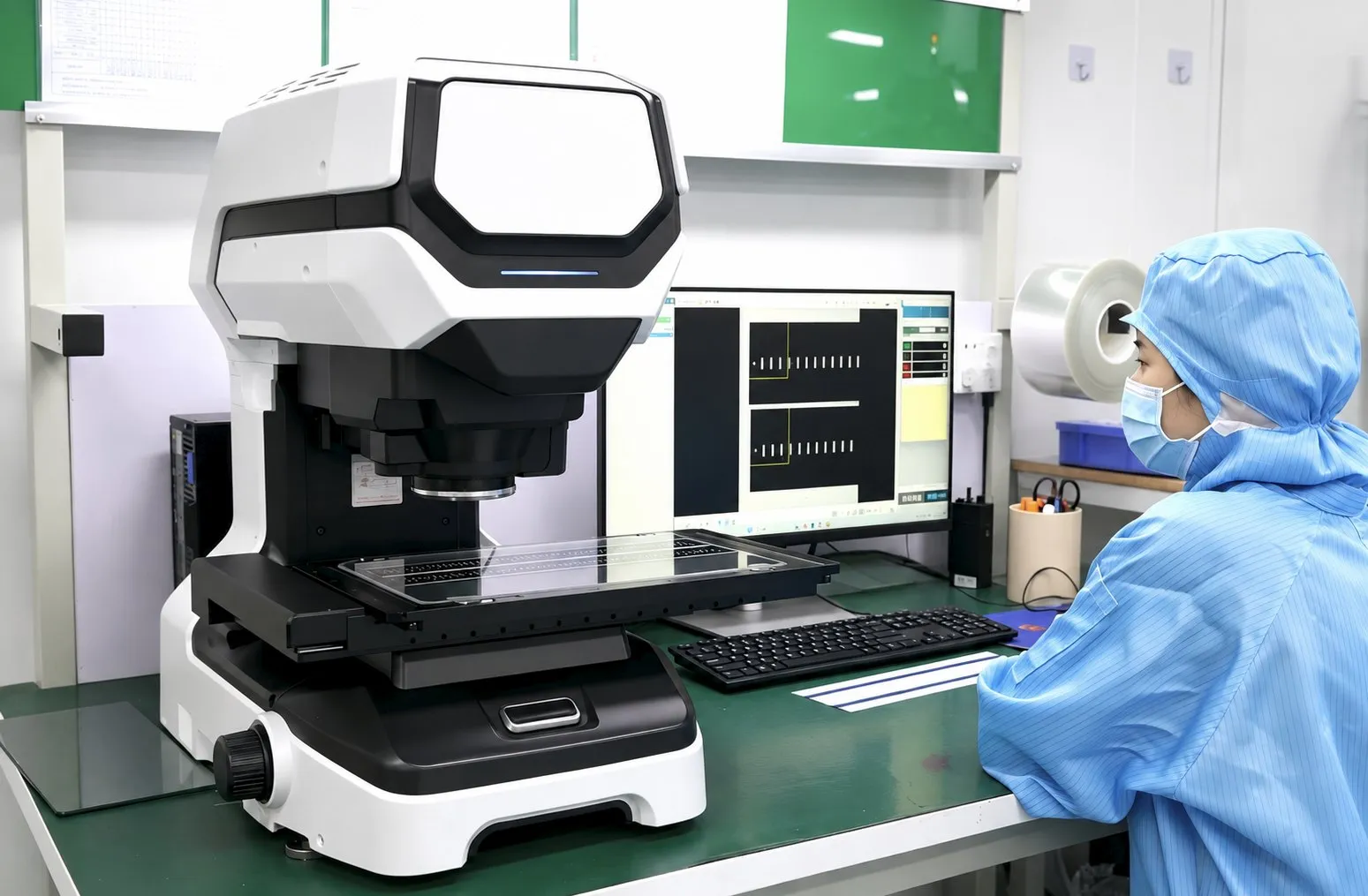
Supporting Certifications: ISO 9001, 14001 and 45001
ISO 13485 is the medical-device centerpiece, but it does not stand alone. Leetoya also maintains ISO 9001 general quality management, ISO 14001 environmental management and ISO 45001 occupational health and safety certifications. Each complements the medical QMS without replacing it.
- ISO 9001 reinforces the general quality habits—documented procedures, customer focus, continuous improvement—that ISO 13485 builds on.
- ISO 14001 manages environmental aspects of converting, such as waste from liner and film offcuts, solvent handling where applicable, and resource use.
- ISO 45001 governs worker safety around converting, slitting and assembly equipment, supporting a stable, trained workforce on the production floor.
Together they show a supplier that manages quality, environment and safety as connected systems rather than isolated checklists.
Why These Standards Matter for Your Device Supply Chain
For device manufacturers, selecting a converter on price alone leaves three risks uninsured: contamination that reaches the skin-contact layer, batch inconsistency that fails clinical or stability studies, and a documentation gap that slows a regulatory submission or customer audit. A partner operating under an ISO 13485-aligned QMS in an ISO Class 7 cleanroom reduces those risks through controlled materials, validated processes and records that can be reviewed on request.
When you inspect suppliers, look for evidence rather than certificates alone: actual batch records, inspection data, cleanroom monitoring history, supplier qualification files and examples of CAPA closures. Our manufacturing capabilities span rotary, flatbed and laser die cutting, precision slitting, medical printing, cleanroom converting, packaging and assembly, all running under the same quality system. The full range of finished medical products—from CGM overpatches and BGM adhesive components to insulin pump fixation parts—shares that traceability framework. You can read more about our organization and certifications on About Leetoya.
If you are preparing a supplier audit, a design history file review, or a new component introduction, our engineering team can walk you through the specific controls that would apply to your adhesive or diagnostic part. Request a quote or an engineering review with your drawings or material requirements, and we will map the production, inspection and traceability plan your component would follow.
Frequently Asked Questions
What is the difference between ISO 13485 and ISO 9001?
ISO 9001 is a general quality management standard applicable across industries, while ISO 13485 is specifically tailored to medical device regulation. It places stronger emphasis on risk management, regulatory requirements, traceability, sterile or controlled processing where applicable, and record retention that supports device compliance. A converter can hold both; ISO 9001 supports general quality habits, and ISO 13485 carries the medical-device-specific controls.
What does ISO Class 7 (Class 10,000) mean for medical converting?
ISO Class 7, also referred to as Class 10,000, defines a controlled cleanroom air cleanliness level intended to limit particulate and fiber contamination during converting. For skin-contact adhesives and diagnostic films, the classification supports lower contamination risk when paired with gowning rules, material staging, scheduled cleaning and environmental monitoring. Classification alone does not guarantee quality; the QMS that operates the cleanroom does.
How does traceability work for converted adhesive components?
Each production order links incoming material lots—adhesive, film, nonwoven or liner—to the converting run, inspection records, and the finished pouch or carton. Batch travelers and retained samples allow backward tracing from a shipped unit to its raw materials, and forward tracing from a material lot to every customer batch that used it. This is essential for investigation, complaints and audit responses.
Does a converter need its own QMS if my device holds the certificate?
Yes. The finished device manufacturer remains ultimately responsible to regulators, but a converter that produces device components shares the downstream risk and must supply controlled, documented outputs. Without its own QMS—document control, supplier qualification, inspection, change control and CAPA—the converter cannot provide the records your technical file and supplier audit expect.
How do you audit a converting supplier's cleanroom and QMS?
Ask to review actual records, not just certificates: batch travelers and inspection reports, cleanroom monitoring logs, supplier qualification files, nonconformance and CAPA records, and examples of change-control approvals. Walk the floor to observe gowning, material flow, equipment condition and inspection stations. A credible supplier should be able to show how a specific component moves from incoming material through converting, inspection and packaged release.