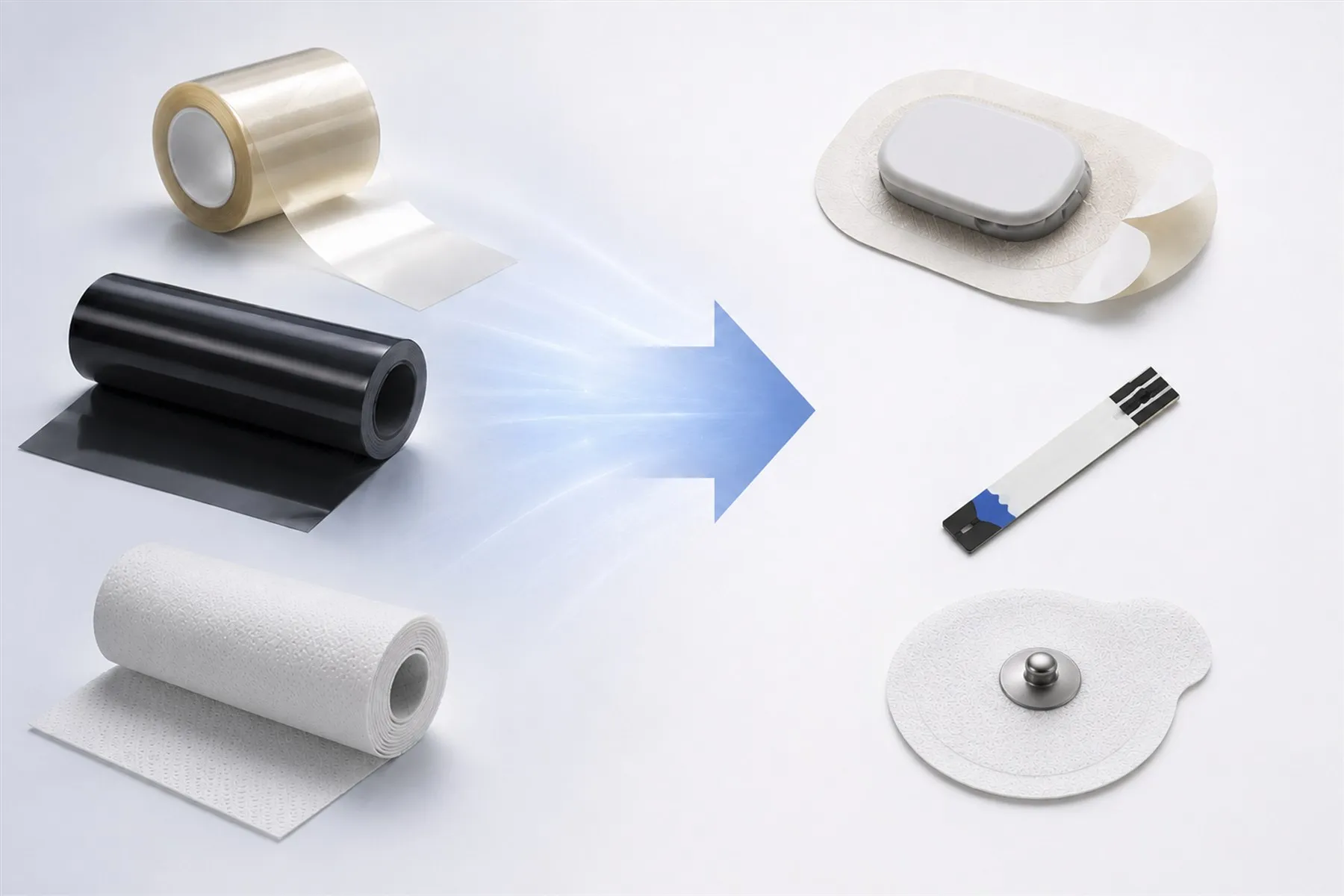
A serious medical adhesive comparison looks past datasheet labels and asks how each chemistry behaves on real skin, over real wear time, in real sweat and movement, and at a real unit cost. Acrylic, silicone and hydrocolloid adhesives each occupy a different balance of tack, gentleness, conformability and expense, and the wrong choice can mean premature lift, skin irritation or a product that cannot hit its target price. This guide compares the three families on the properties that matter most to device engineers—initial and sustained adhesion, gentle removal, wear duration, breathability, reapplication, relative cost and typical use—so you can shortlist materials with confidence before prototyping.
Table of Contents
- What a Medical Adhesive Comparison Should Measure
- Acrylic Medical Adhesives: Strong, Economical, Broad Performance Window
- Silicone Medical Adhesives: Gentle Removal and Reapplication
- Hydrocolloid Adhesives: Moisture Management for Long Wear
- Side-by-Side Performance and Cost Comparison
- Matching the Adhesive to Your Device and Skin Contact
- Testing Before Commitment: Prototyping and Validation
- Frequently Asked Questions
What a Medical Adhesive Comparison Should Measure
Before comparing chemistries, define the demands your device places on the adhesive. The same material that anchors a glucose sensor through a shower may be overkill—or too aggressive—for a short-duration diagnostic electrode, and a dressing adhesive that handles exudate well may not hold a heavy pump module during exercise. A structured comparison should score each option against the following dimensions:
- Initial tack: how well the adhesive grips on first contact, before pressure and dwell time build bond strength.
- Sustained adhesion: peel and shear force retained over hours or weeks, through sweat, washing, friction and clothing movement.
- Skin gentleness: how the adhesive interacts with stratum corneum and protein layers at removal, and the risk of redness or stripping.
- Wear duration: the realistic attachment window expected from a single application, given carrier and backing choice.
- Breathability and moisture management: vapor transmission, sweat handling and resistance to maceration around the bonded area.
- Removability and reapplication: clean lift-off, residue level, and whether the adhesive can be repositioned or reapplied.
- Relative cost: material cost per converted part, tooling implications and expected yield, rather than roll price alone.
- Regulatory and supplier readiness: availability in medical-grade grades, liner options and documented quality records.
These dimensions interact. High tack and extreme gentleness often pull against each other, and cost rarely tracks performance in a straight line. The job of the comparison is to make those tradeoffs explicit for your device rather than pick a universally "best" adhesive.
Acrylic Medical Adhesives: Strong, Economical, Broad Performance Window
Acrylic pressure-sensitive adhesives are the workhorse of medical converting. They offer strong initial and sustained adhesion, good resistance to aging and temperature variation, and a wide selection of coated grades that can be tuned for shear, peel and release force. For devices that need a dependable bond through daily activity, bathing and normal skin oils, acrylics provide a predictable, well-characterized starting point at a generally lower material cost than silicone or hydrocolloid options.
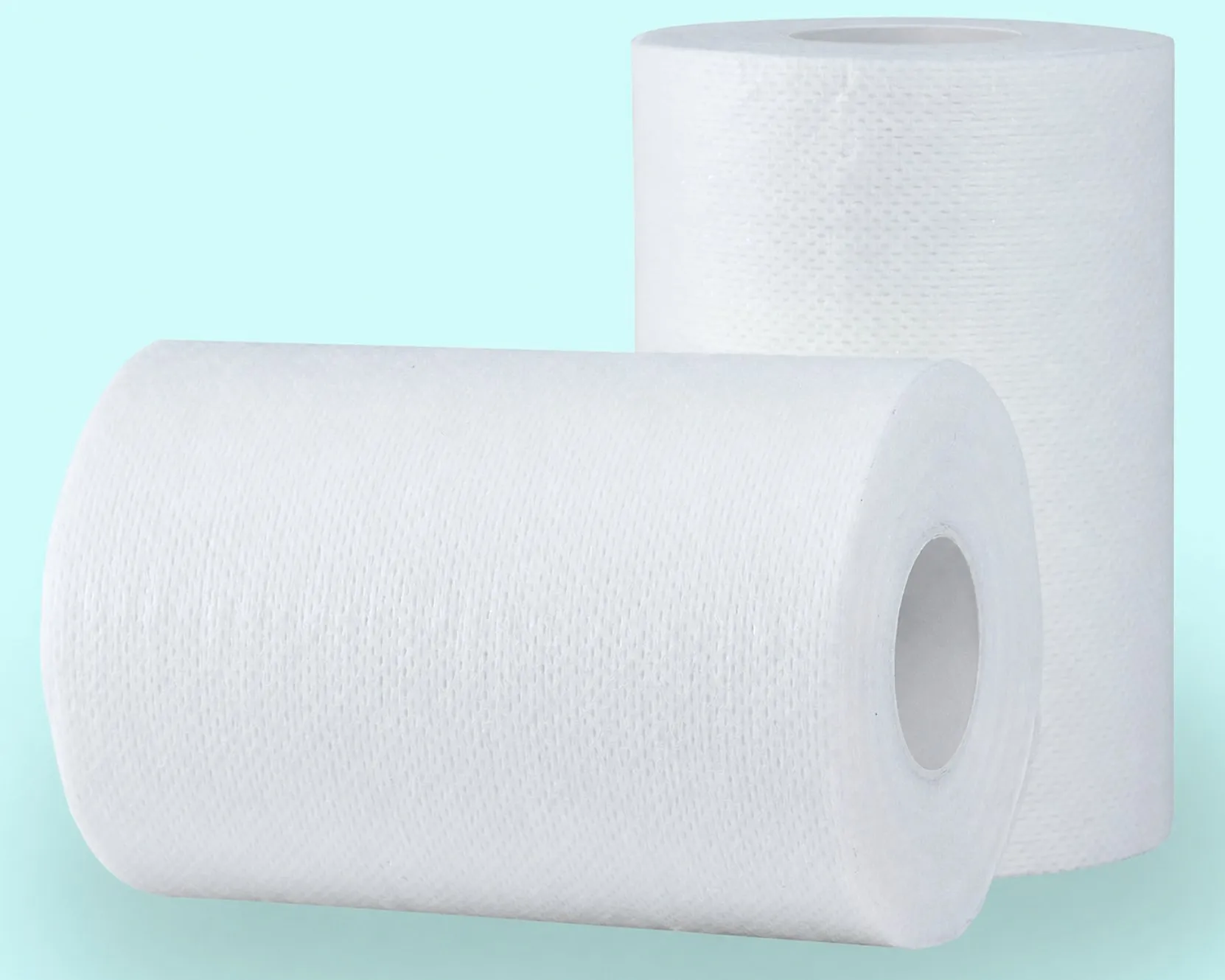
The tradeoff is gentleness. Acrylics tend to form a firmer bond with the skin surface; removal can strip superficial skin layers and may be less comfortable on fragile, aged or frequently reapplied skin. They also vary by formulation: some acrylic grades are designed for sensitive-skin contact, so a broad statement that "acrylic is harsh" is not accurate. The carrier, adhesive thickness and liner all modify feel. Common roles include device fixation where wear time is moderate, components that need strong shear against movement, and products where unit cost drives high-volume programs. You can review the available acrylic adhesives grades and their substrate pairings on our materials hub.
Silicone Medical Adhesives: Gentle Removal and Reapplication
Silicone adhesives are chosen primarily for skin comfort. They bond securely enough to hold wearable devices, but release gently from skin, with less disruption of superficial protein layers than many acrylic systems. Published comparative work on skin adhesives reports silicone removing substantially less protein at lift-off and retaining a large share of its peel force after repeated reapplication cycles, which matters for devices that are adjusted, repositioned or changed by caregivers. Silicone also tends to leave less residue and feels less aggressive on thin or sensitive skin.
The tradeoff is cost and some bond characteristics: silicone grades typically carry a higher material cost, and engineers must match the silicone grade to the device weight, carrier film and wear condition, because tack and shear behavior differ from acrylic. Silicone is a strong fit for long-wear sensors, repeated-application patches and products where skin comfort is a core selling point. Our silicone adhesives are paired with appropriate backings and liners during converting so the adhesive's gentle properties survive lamination and die cutting.
Hydrocolloid Adhesives: Moisture Management for Long Wear
Hydrocolloids are composite adhesive systems that absorb moisture: the adhesive mass swells as it takes up exudate or sweat, forming a gel layer that protects the skin while maintaining closure. This moisture-handling behavior makes them a traditional choice for wound-contact and occlusion-oriented applications, and for patches where localized dampness would otherwise undermine an ordinary pressure-sensitive adhesive. They conform well to movement and provide a cushioned, forgiving surface against skin.
The tradeoffs: hydrocolloid adhesion changes as the mass absorbs fluid, so bond performance over the full wear window must be validated against expected sweat and skin conditions. They are not always the first choice for heavy or rigid modules where a firm, stable shear platform is required, and selection depends on the dressing or patch geometry. Hydrocolloid adhesives are typically combined with nonwoven or film carriers during lamination, and their thickness and gel fraction are part of the design specification rather than an off-the-shelf fixed choice.
Side-by-Side Performance and Cost Comparison
The table below summarizes the three families across the comparison dimensions defined earlier. Ratings are directional engineering guidance, not substitutes for application testing; actual performance depends on grade, coat weight, carrier, liner and skin conditions.
| Dimension | Acrylic adhesive | Silicone adhesive | Hydrocolloid adhesive |
|---|---|---|---|
| Initial tack | High, tunable by grade | Moderate to good, comfort-focused | Moderate; develops secure bond after contact |
| Sustained adhesion | Strong peel and shear over moderate wear | Secure but gentler; repeatable peel after reapplication | Stable while moisture level stays within design range |
| Skin gentleness | Lower to moderate; firm bond on removal | Highest; gentle lift-off, less protein disruption | Moderate; cushioning but can leave gel residue |
| Typical wear duration | Short to moderate | Moderate to long-wear, depending on grade | Long-wear, moisture-managed contact |
| Breathability / moisture | Depends on carrier; good when paired with breathable film | Good vapor behavior with suitable backing | Absorbs moisture into the adhesive mass |
| Removability / reapplication | Permanent-feeling peel; limited repositioning | Repositionable and reappliable with retained force | Removal depends on hydration state |
| Relative material cost | Generally lowest | Premium | Mid-to-premium |
| Typical use | High-volume fixation, stable shear, cost-sensitive devices | Sensitive skin, long-wear sensors, repeated application | Wound-contact, exudate or sweat-managed patches |
Matching the Adhesive to Your Device and Skin Contact
Once the chemistry shortlist exists, match it to the device's physical demands. A lightweight biosensor worn on the arm for two weeks prioritizes breathability, gentle removal and consistent adhesion through sweat; a heavier wearable module prioritizes shear strength and a rigid carrier; a single-use diagnostic component prioritizes tack and low cost over reapplication. The adhesive rarely acts alone: backing film, nonwoven carrier, foam layer and liner all change how the adhesive performs against skin.
This is why material selection should tie back to the application family. Wearable medical devices such as glucose monitors and insulin delivery systems place simultaneous demands on adhesion, comfort and wear time; custom CGM adhesive patches often pair a tuned adhesive with a breathable nonwoven or film carrier, while insulin pump adhesive components balance module weight against skin comfort. Review the full medical adhesive materials platform—acrylics, silicones, hydrocolloids, nonwovens, TPU films, foams, hydrophilic films and liners—to see which combinations match your use case.
Testing Before Commitment: Prototyping and Validation
Datasheet comparison de-risks the choice, but skin and wear conditions cannot be fully simulated on paper. The reliable path is prototype-based testing: convert candidate adhesive and carrier combinations into samples, run adhesion and peel checks under controlled conditions, and evaluate wear trials on representative users before locking material selection for production. Coat weight, liner release force and lamination order all affect the finished bond, so prototypes should reflect the intended converting route rather than hand-applied tape.

During validation, track failure modes explicitly: edge lift, slippage under shear, redness after removal, residue, moisture accumulation and loss of bond after showering or exercise. Feed those observations back into the grade and backing choice. Because material selection changes tooling and process parameters, it is far cheaper to swap an adhesive grade in the prototype stage than after production tooling and packaging are fixed.
If your device is still in concept or revision, our engineering team can help narrow the adhesive family from your wear-time, skin-contact and cost targets, then convert testable samples through rapid prototyping. Request a quote or material consultation with your device description, intended wear duration and skin-contact class, and we will propose candidate material combinations for evaluation.
Frequently Asked Questions
Which medical adhesive is cheapest for high-volume production?
Acrylic adhesives generally offer the lowest material cost per converted part for high-volume programs, especially where strong adhesion and moderate wear are required. However, total cost should include rejection rate, replacement patches and skin-event risk; a premium silicone that prevents lift or irritation can be cheaper overall for a long-wear device.
When should I choose silicone over acrylic for a wearable device?
Choose silicone when gentle removal, sensitive skin, repositioning or repeated application are priorities, especially for long-wear sensors or patches used by caregivers. Choose acrylic when strong shear, predictable peel and lower unit cost dominate, and skin fragility is less of a concern. Grade-specific testing is still required in both cases.
Are hydrocolloid adhesives suitable for insulin pumps or CGM sensors?
Hydrocolloids are used where moisture absorption and cushioning are valuable, but their bond changes as the gel absorbs sweat or exudate, so suitability for a specific pump module or sensor must be validated against wear conditions. Many wearable fixation parts instead use acrylic or silicone adhesives on nonwoven or film carriers, with hydrocolloid reserved for wound-contact or moist environments.
How much wear time can each adhesive family realistically support?
Wear time is set by the whole laminate—adhesive, carrier, backing and liner—not the adhesive alone. Acrylics commonly cover short-to-moderate wear, silicones are engineered into moderate-to-long-wear designs, and hydrocolloids support long-wear moisture-managed contact. Your target wear window should drive prototype testing under sweat, washing and movement conditions.
Can a converter switch adhesive suppliers after production starts?
Material or supplier changes should go through controlled change management: risk assessment, validation and documentation before implementation. Because adhesive lot and supplier affect bond performance, skin contact and regulatory records, post-launch changes need the same scrutiny as initial selection. Plan the material family early so later swaps remain manageable.