Índice de contenidos
- El recorrido del prototipo a la producción
- Stage 1: Concept and Material Selection
- Etapa 2: prototipado rápido
- Etapa 3: validación del diseño
- Etapa 4: utillaje y preparación
- Etapa 5: validación de procesos
- Typical Timeline and Costs
- FAQ
Taking a medical adhesive component from concept to commercial production requires careful planning, a qualified manufacturing partner, and a systematic development process. This guide walks through each stage of desarrollo de componentes adhesivos médicos, from initial concept through mass production with precision die cutting and converting. Whether you are developing a CGM patch, BGM spacer, or wearable adhesive, understanding this journey will help you manage timelines, costs, and risks.

The Prototype-to-Production Journey
The journey from initial concept to commercial production typically spans 6 to 18 months, depending on complexity and regulatory classification. Working with a manufacturing partner that supports the full journey — from rapid prototyping through commercial production — reduces risk, shortens timelines, and ensures design continuity. A specialist converter brings material expertise, process knowledge, and regulatory understanding that accelerates every stage.
Stage 1: Concept and Material Selection
The development journey begins with defining what the component must do. Key questions include:
- What functional requirements must the component meet? (bond strength, wear time, fluid resistance)
- What are the performance targets? (peel adhesion, shear holding, breathability)
- What are the material constraints? (biocompatibility, sterilization method, regulatory classification)
- What volume is expected? (influences process selection and tooling investment)
- What is the target unit cost at production volume?
Your converter's engineering team will recommend materials from their material solutions library based on these requirements. They may suggest standard off-the-shelf materials or custom formulations depending on performance needs. This stage typically takes 2-4 weeks.
Stage 2: Rapid Prototyping
Prototyping validates the design before significant tooling investment. Several prototyping methods are available:
| Method | Lead Time | Cost | Best For |
|---|---|---|---|
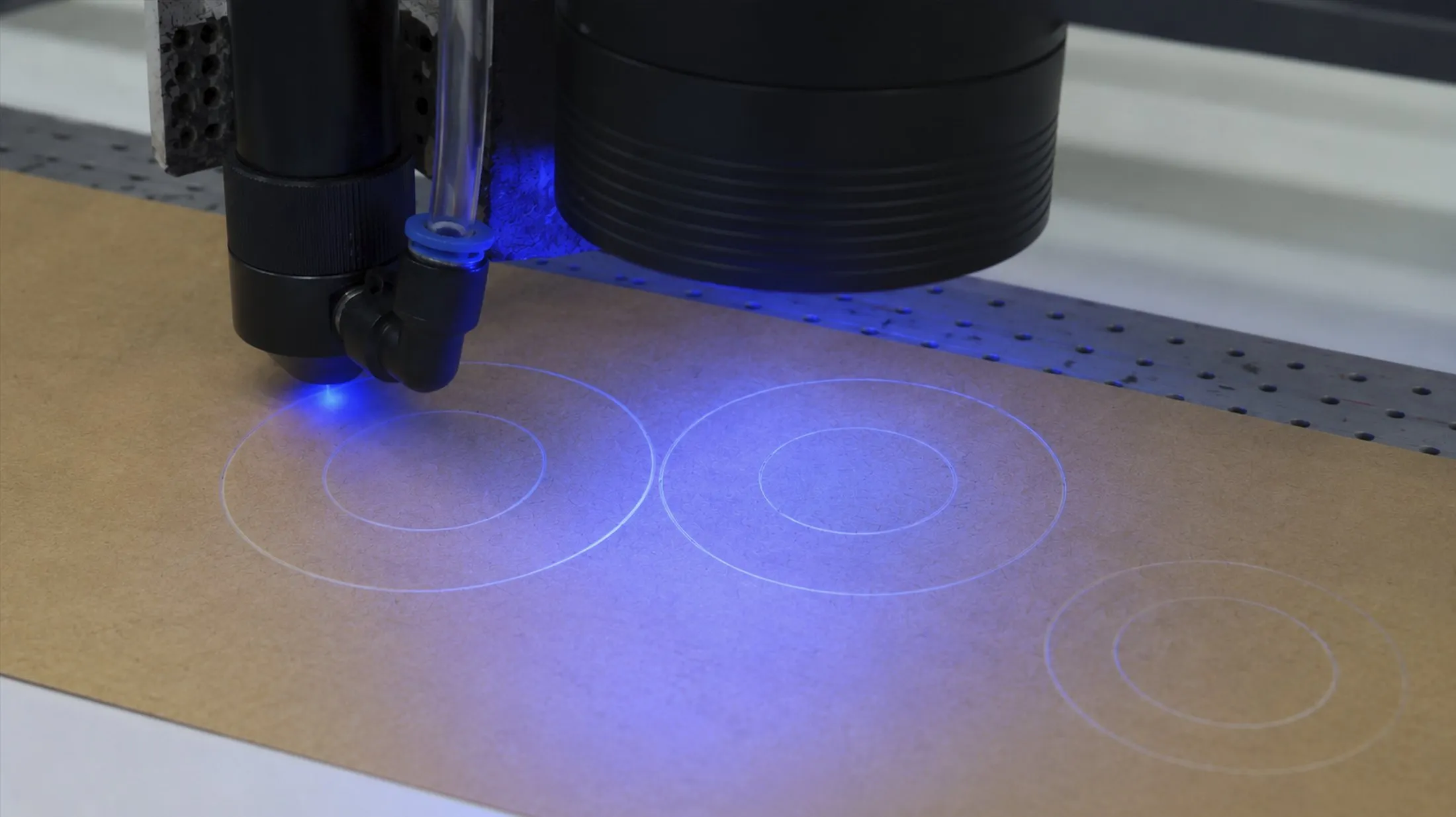
| Laser Cutting | 1-3 days | $100-500 | Quick shape iterations |
| Digital Knife Cutting | 1-5 days | $200-1,000 | Multi-layer prototypes |
| Flatbed Die Cutting | 2-4 weeks | $300-1,500 | Validation-quality prototypes |
| 3D Printed Tooling | 1-2 weeks | $500-2,000 | Low-volume bridge production |
Expect 2-5 design iterations during this stage. Each iteration refines the geometry, material combination, or adhesive formulation based on testing feedback. Most teams complete prototyping in 4-8 weeks.
Stage 3: Design Validation
Once the prototype design is finalized, it must be validated for its intended use. This stage includes:
- Wear Testing: Real-user studies on actual skin to validate wear time, comfort, and adhesion performance.
- Performance Testing: Peel adhesion, shear holding, tack, and other mechanical properties per ASTM standards.
- Biocompatibility Testing: ISO 10993-5 (cytotoxicity), -10 (sensitization/irritation), and other tests as needed for skin-contact applications.
- Functional Testing: Testing the component within the final device to ensure it integrates properly.
- Accelerated Aging: ASTM F1980 predicts shelf life by exposing samples to elevated temperature and humidity.
This stage is critical — fixing design issues now is far cheaper than after production tooling is built. Validation typically takes 4-12 weeks depending on test complexity.
Stage 4: Tooling and Production Setup
Once the design is frozen, production tooling is fabricated. For high-volume production, this means a custom rotary die cylinder. For lower volumes, flatbed dies may suffice.
The production line is then configured: materials are loaded, dies are installed, and process parameters are set. First articles are produced and inspected against drawings. The customer approves the first article before full production begins. Tooling and setup typically take 3-6 weeks.
Stage 5: Process Validation and Commercial Production
Regulatory compliance requires formal process validation before commercial release. This follows the IQ/OQ/PQ framework:
- IQ (Installation Qualification): Verify that equipment is installed correctly and meets specifications.
- OQ (Operational Qualification): Confirm the process operates within defined parameters across its operating range.
- PQ (Performance Qualification): Demonstrate consistent output over multiple production runs at normal operating conditions.
After successful validation, the component enters commercial production in our certified cleanroom. Ongoing monitoring and in-process QC ensure continued consistency. Companies producing insulin pump components, CGM patches, and other regulated products benefit from having all production stages under one roof.
Typical Timeline and Costs
| Stage | Typical Duration | Typical Cost |
|---|---|---|
| Concept & Materials | 2-4 weeks | $0-2,000 (engineering time) |
| Prototyping | 1-6 weeks | $500-5,000 |
| Design Validation | 4-12 weeks | $10,000-50,000 (testing) |
| Tooling & Setup | 3-6 weeks | $1,500-5,000 (tooling) |
| Process Validation | 4-8 weeks | $10,000-30,000 |
| Total | 6-18 months | $25,000-100,000+ |
FAQ
How much does medical adhesive component development cost?
Typical development costs range from $25,000 to $100,000+, depending on complexity. Prototyping is relatively inexpensive ($500-5,000), while validation and testing represent the majority of the investment.
Can I produce before full process validation?
Engineering runs and test market production are possible, but commercial release to patients requires completed and documented validation under ISO 13485.
How long does the entire process take?
Most projects complete in 6-12 months from concept to commercial production. Complex devices with extensive biocompatibility testing may take 12-18 months.
Can you handle my regulatory documentation needs?
Yes. We provide the manufacturing documentation needed for FDA 510(k) submissions and EU MDR technical files, including process validation reports, material traceability, and biocompatibility support. Contact us to discuss your specific project timeline.
Leetoya provides end-to-end medical adhesive component development — from rapid prototyping through cleanroom production. Start your project today.