Inhaltsverzeichnis
- Why Adhesive Design Drives Wearable Success
- Zentrale Designaspekte
- Leitfaden zur Materialauswahl
- Mehrschichtiger Pflasteraufbau
- Common Design Challenges
- Testing and Validation
- FAQ
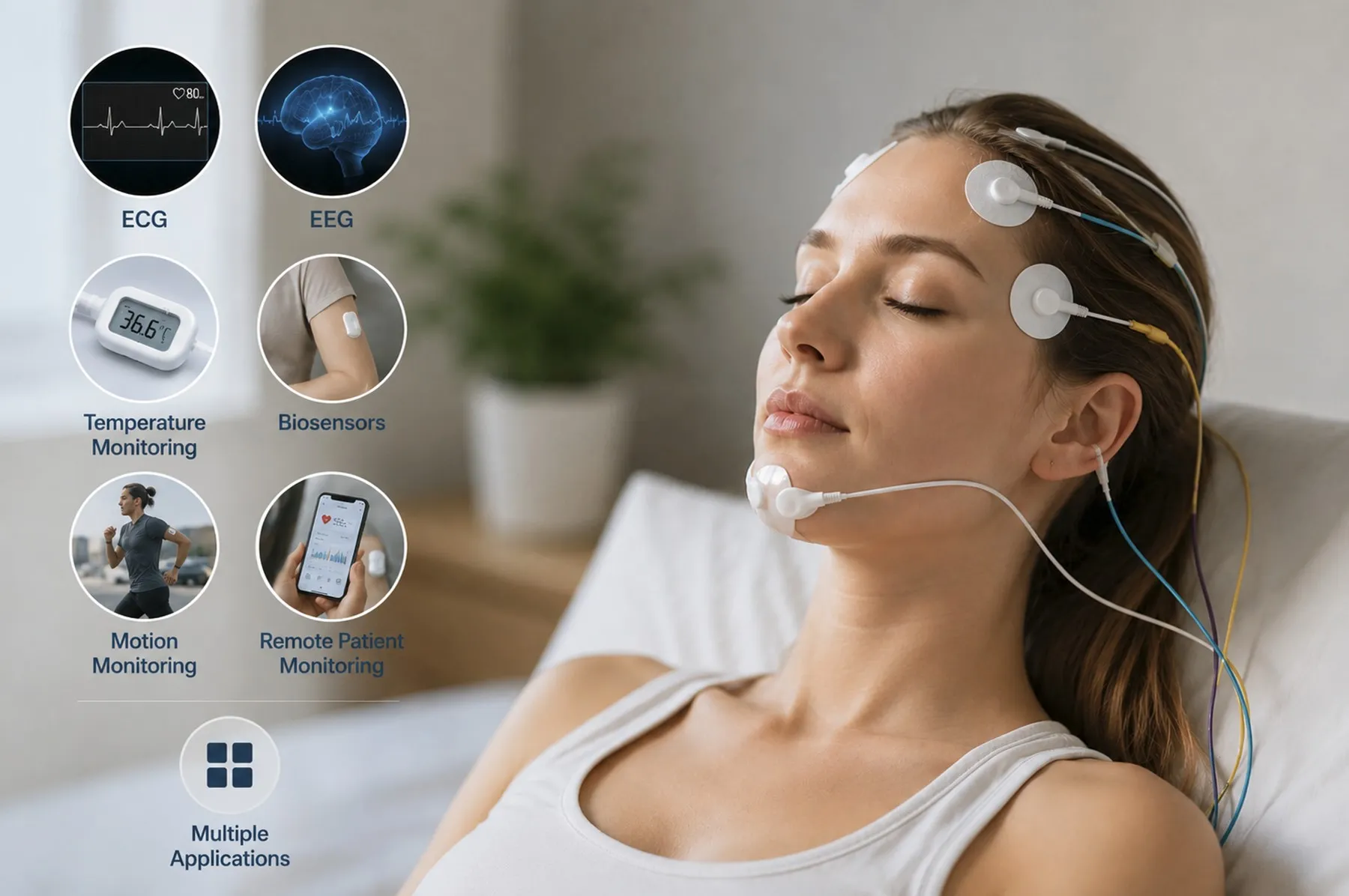
Der Klebstoff ist die wichtigste anwenderseitige Komponente in jedem tragbares Medizinprodukt. For continuous glucose monitors, insulin pumps, ECG monitors, and temperature trackers, the patch determines whether the device stays attached for its intended wear period or fails prematurely — directly impacting patient outcomes and device brand reputation. This guide covers Klebstoffauslegung für tragbare Medizinprodukte, from material selection to manufacturing considerations.

Why Adhesive Design Drives Wearable Success
For CGM sensors, insulin pumps, ECG monitors, and temperature trackers, the adhesive patch is the primary interface between device and patient. Poor adhesion causes premature detachment, requiring replacement and disrupting data collection. Overly aggressive adhesion causes skin stripping, irritation, and discomfort. The right adhesive design balances wear time, comfort, skin safety, and ease of removal — often described as the "comfort-bond balance."
Wearable medical devices that last 7-14 days on skin require adhesives engineered for long-term skin contact. These adhesives must maintain their bond through showering, exercise, sweating, and temperature changes, while being gentle enough not to damage skin upon removal.
Key Design Considerations
Every wearable adhesive design must address these variables:
| Factor | Impact on Design | Typical Range |
|---|---|---|
| Wear Duration | Determines adhesive chemistry | 1-14 days typical |
| Skin Type | Very dry / very oily / sensitive | Population-dependent |
| Body Location | Abdomen vs upper arm vs chest | Different movement profiles |
| Activity Level | Exercise, showering, swimming | Affects water resistance |
| Device Weight | Bond strength requirements | 5-50 grams typical |
| Skin Condition | Diabetes affects skin properties | CGM users: thinner skin |
Material Selection Guide
Choosing the right adhesive is the most critical design decision:
- Acrylic Adhesives: High tack, long wear (7-14 days), proven biocompatibility. The industry standard for CGM and insulin pump patches. Excellent resistance to moisture and body oils.
- Silicone Adhesives: Gentle on sensitive skin, easy atraumatic removal, lower initial tack. Preferred for pediatric use, elderly patients, and skin that is easily irritated.
- Hydrocolloid: Absorbs wound exudate, cushions the skin. Used in wound care and moisture-managing patches.
- PU Film Tops: Breathable, water-resistant outer layer that allows moisture vapor transmission while blocking liquid water.
- Foam Layers: Cushion and protect delicate sensors from impacts. Available in PE, PU, and silicone foam.
- Nonwoven Backings: Cloth-like feel, conformable, breathable. Preferred for patient comfort.
Our material solutions page details available substrates, adhesives, and liner options for wearable applications. Most wearable designs combine 2-4 layers, each serving a specific function.
Multi-Layer Patch Structure
A well-designed wearable patch is a laminated composite with multiple functional layers:
- Release Liner: Silicone-coated paper or PET that protects the adhesive before application. Removed at time of use.
- Skin-Contact Adhesive Layer: Medical acrylic or silicone adhesive formulated for extended skin wear.
- Carrier / Foam Layer: Provides structural support, cushioning, and the sensor window geometry.
- Top Film / Nonwoven: Decorative and protective outer layer. Often printed with branding and instructions.
- Precision Die-Cut Window: Custom-shaped opening that accommodates the sensor housing or needle insertion point.
Each layer must be precisely die cut and laminated in registration, typically within +/- 0.1mm tolerance. This is why working with an experienced converter is critical.
Common Design Challenges
- Edge Lifting: Occurs when the patch edges curl up due to skin movement. Solution: rounded corners and tapered edges.
- Skin Irritation: Usually caused by adhesive formulation or occlusivity. Solution: more breathable top film or silicone adhesive.
- Premature Detachment: Often related to application technique or skin prep. Solution: textured adhesive pattern and better instructions.
- Difficulty Removal: Especially problematic for long-wear patches. Solution: perforated design or silicone adhesive.
- Sensor Interference: Electromagnetic interference from certain adhesive layers. Solution: non-conductive materials and proper grounding.
Testing and Validation
Wearable adhesives require comprehensive testing before commercial launch:
| Test | Standard | Purpose |
|---|---|---|
| Peel Adhesion | ASTM D3330 / PSTC-101 | Bond strength measurement |
| Shear Holding | ASTM D3654 / PSTC-107 | Resistance to sliding under load |
| Tack | PSTC-16 / rolling ball | Initial grab properties |
| Biocompatibility | ISO 10993-5 / -10 | Cytotoxicity, sensitization, irritation |
| Breathability | ASTM E96 | Moisture vapor transmission rate |
| Accelerated Aging | ASTM F1980 | Shelf-life prediction |
Use rapid prototyping to test multiple material combinations before committing to production tooling.
FAQ
What is the best adhesive for 14-day wear?
High-tack medical acrylic adhesives are the industry standard for 14-day wear. For patients with sensitive skin, acrylic-silicone hybrid blends or pure silicone adhesives may be preferred.
How thick should a wearable patch be?
Most wearable patches range from 0.1mm to 0.5mm total thickness. Thinner patches (0.1-0.2mm) are more discreet and comfortable. Thicker patches (0.3-0.5mm) offer better cushioning for sensor protection.
Can the patch be transparent?
Yes. Clear PU film with acrylic adhesive produces a nearly transparent patch, popular for cosmetic acceptability. However, transparent patches show skin discoloration and hair, which some patients dislike.
How do I get started with a custom wearable adhesive?
Contact our engineering team with your device specifications, wear time requirement, and target patient population. We will recommend materials, produce prototypes, and guide you through validation. Visit our contact page to start.
Leetoya designs and manufactures wearable medical device adhesives, including CGM patches, insulin pump fixation, and ECG electrodes. Start your project today.