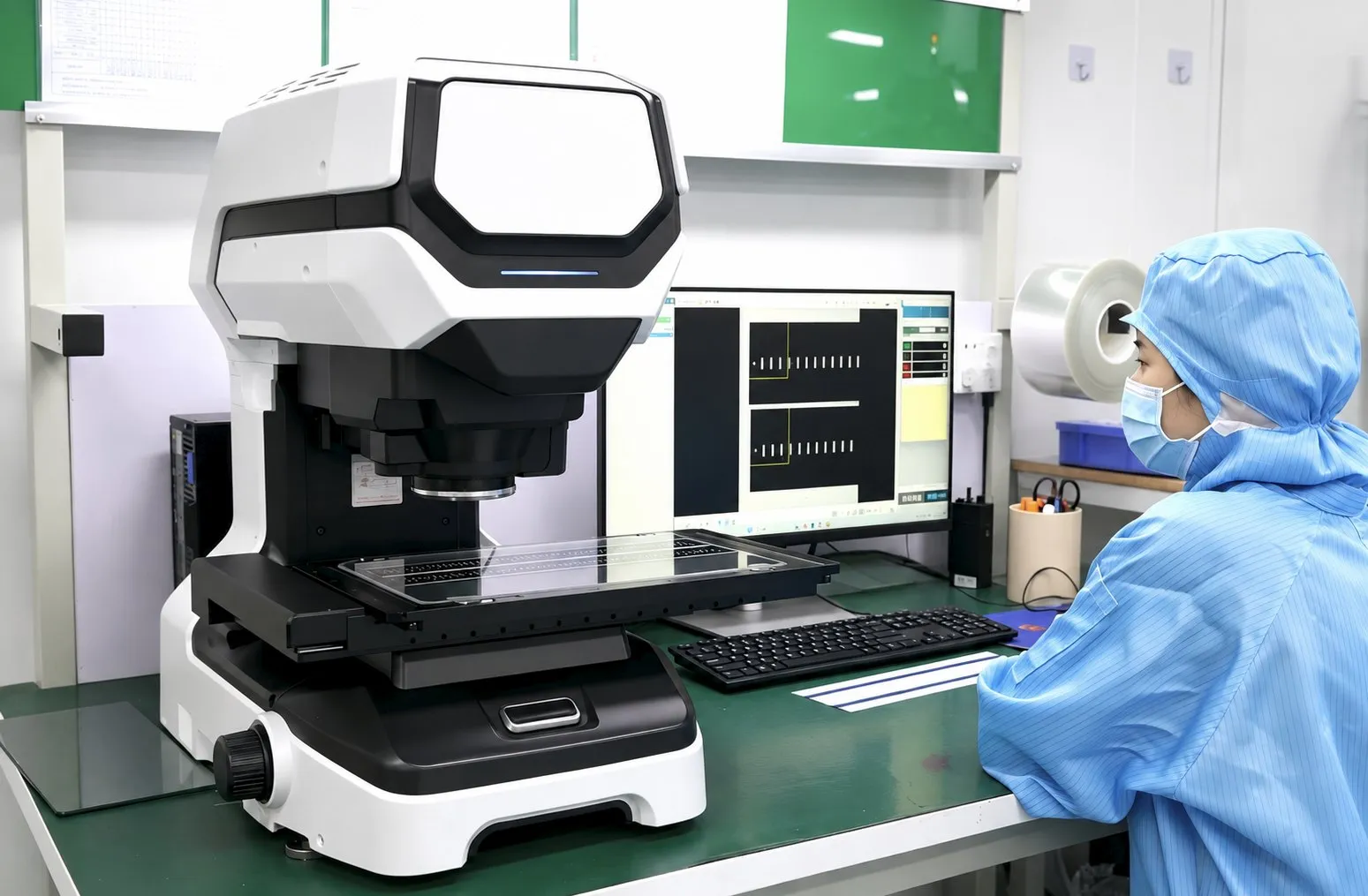
Sterilization is usually decided late in a device programme, after the adhesive stack has been chosen for adhesion and comfort. That sequencing causes a familiar pattern of surprises: peel drops after gamma, the liner releases differently after ethylene oxide, or a patch that passed wear testing before sterilization becomes noticeably stiffer afterwards.
For a component supplier, the question is not which sterilization method is best — that belongs to the device manufacturer and the packaging validation — but which material combinations tolerate the chosen route without losing function. This article sets out the mechanisms behind each common method, the material choices that survive them, and the boundary between what a cleanroom converting supplier can validate and what only the finished-device validation can establish.
Table of Contents
- What Sterilization Actually Does to a Component
- Ethylene Oxide: Penetration, Residues and Adhesive Effects
- Gamma and E-beam: Radical Chemistry and Crosslinking
- Moist Heat and Steam: Hydrolysis Risk
- Material Selection Matrix by Sterilization Route
- Liner and Packaging Interactions
- Design Rules That Reduce Sterilization Risk
- What a Converter Can and Cannot Validate
- Questions to Ask Before Fixing the Sterilization Route
What Sterilization Actually Does to a Component
Every sterilization route delivers one of three stressors: chemical reactivity, ionizing energy, or heat and moisture. Adhesives respond through chain scission, crosslinking, oxidation, plasticizer migration or water uptake. Backings respond through shrinkage, embrittlement or delamination. Liners respond through release-force drift and, for papers, dimensional change.
The visible symptoms are consistent across programmes: lower peel, higher shear stiffness, yellowing, edge lift, residue, or a liner that suddenly grips. Because these effects are cumulative with aging, a component that is marginal immediately after sterilization often fails in the field after six months.
Ethylene Oxide: Penetration, Residues and Adhesive Effects
EtO works by alkylating microbial DNA, and it needs moisture and gas to reach every surface. That is fine for porous nonwoven laminates and problematic for film-faced or foil-packaged products, where the diffusion path determines cycle length and aeration time.
For adhesives, the dominant risks are residual EtO and ethylene chlorohydrin, plus softening from moisture uptake during conditioning. Aeration removes residues but also exposes the adhesive to warm humid air for hours. Materials with high surface area — foams and nonwovens — absorb more and require longer aeration, which is a packaging and cycle-time cost that should be considered when the stack is chosen.

Gamma and E-beam: Radical Chemistry and Crosslinking
Ionizing radiation generates free radicals. In acrylic adhesives this often produces additional crosslinking, which raises shear and lowers peel — sometimes usefully, sometimes enough to fail a specification. Natural rubber and some polyisobutylene systems are more sensitive to chain scission and can soften or degrade. Silicone adhesives are relatively radiation-tolerant but not immune.
Dose matters, and so does dose rate. A component qualified at 25 kGy may behave differently at 50 kGy, and a device marketed with a sterility assurance level based on overkill will see the higher end. Specify the maximum dose the product will ever receive, then test at that dose plus aging, not at a nominal figure.
Moist Heat and Steam: Hydrolysis Risk
Steam sterilization is the harshest route for moisture-sensitive adhesives and liners. Hydrolysis can reduce molecular weight, paper liners can cockle, and multi-layer laminates can delaminate if the adhesive-to-carrier bond is weaker than the steam-induced stress. Repeated cycles compound the damage.
Where steam is unavoidable, look for hydrophobic adhesive chemistries, film carriers rather than paper, and a construction that tolerates a drying cycle afterwards. Products that will be reprocessed in a hospital autoclave need cycle testing, not a single-cycle qualification.
Material Selection Matrix by Sterilization Route
A pragmatic starting point: acrylic adhesives on PET or PU film carriers tolerate gamma and EtO well; silicone adhesives on nonwoven or film handle gamma, EtO and moderate steam; hydrocolloid and foam constructions are usually EtO-first because heat and moisture degrade their absorbent phase; paper liners are acceptable for gamma and EtO but risky for steam.
This matrix narrows candidates; it does not qualify them. Each combination still needs dose- or cycle-specific data on the finished laminate, including peel, shear, release force and appearance.
Liner and Packaging Interactions
Packaging is part of the sterilization system, not an afterthought. A foil pouch blocks EtO, a Tyvek lid allows it, and a film liner inside the pouch changes the moisture path. If the pack is opened and resealed in a clinical setting, the liner may also see repeated handling.
Ask how the component is presented: roll, sheet, or pre-cut part on a carrier card. Presentation determines whether the liner must survive a sterilization cycle flat, and whether curl after the cycle will jam automated assembly equipment. Converters who also handle packaging and assembly can usually propose a presentation that fits both the sterilization route and the line.
Design Rules That Reduce Sterilization Risk
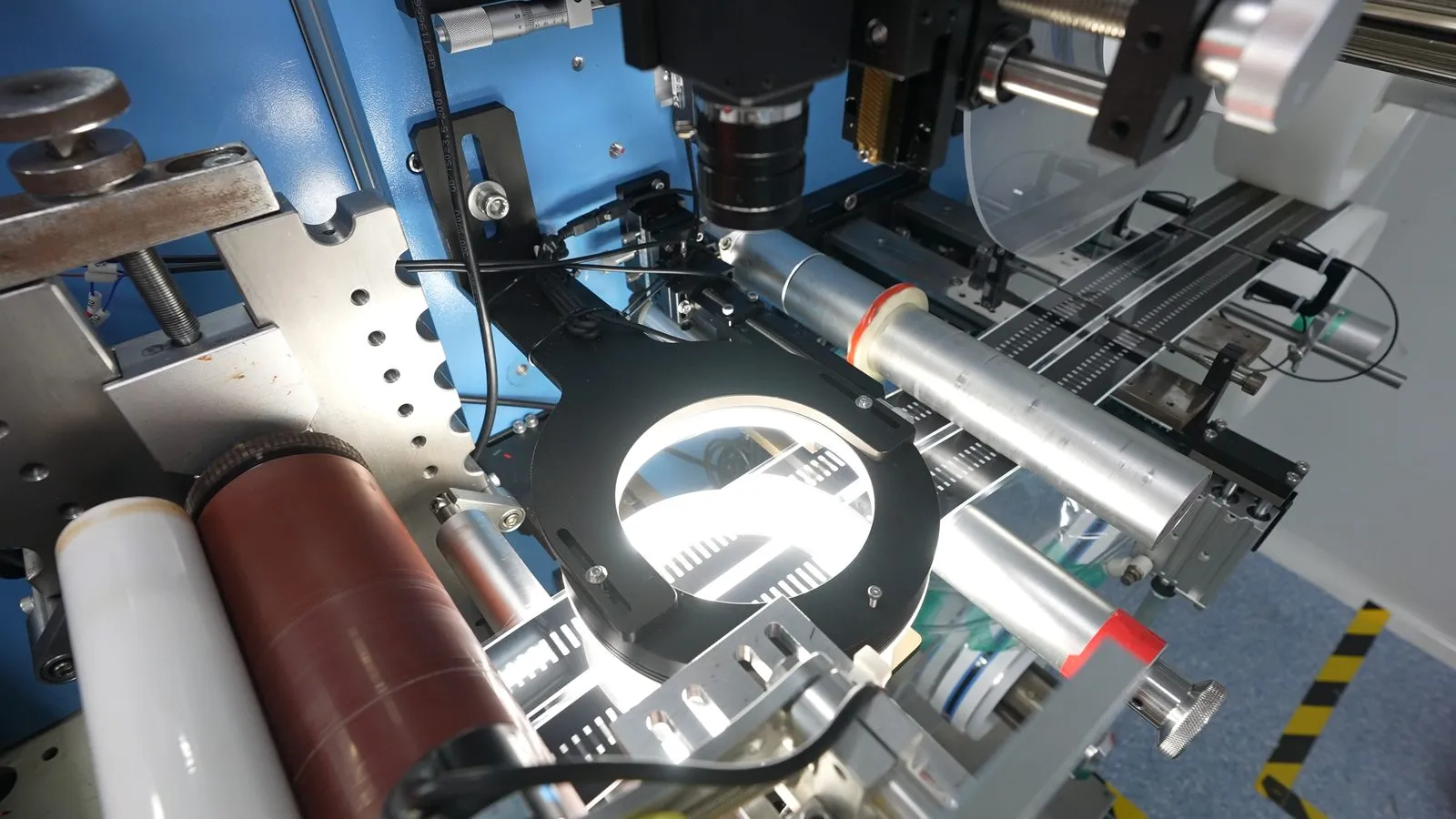
Keep the number of distinct materials low. Thin adhesive coats sterilize more uniformly than thick gels. Avoid large continuous adhesive areas where gas must diffuse laterally. Where a housing or connector is bonded onto the patch, check that the bond survives the cycle rather than only the adhesive-to-skin interface.
Geometry matters too: sharp internal corners concentrate stress after shrinkage and are the first place to lift. A short design review against the sterilization route is cheaper than a re-tooling cycle.
What a Converter Can and Cannot Validate
A converting supplier can control incoming material, coat weight, lamination, die cutting, cleanliness and lot traceability. It can provide material certificates, in-process capability data, and pre-sterilization functional test results on the converted component. It can run sterilization-compatibility studies on request as development work.
It cannot declare a device sterile, establish a sterility assurance level, or validate the finished device's packaging. Those belong to the device manufacturer under the quality system required by 21 CFR 820 and the applicable sterilization standards. Keeping that boundary explicit protects both parties during audits.
Questions to Ask Before Fixing the Sterilization Route
What is the maximum dose or the maximum cycle count the product will ever see? Which layers are moisture sensitive? Is the pouch permeable? What peel and shear limits are non-negotiable after aging? Does the liner still release by hand after the cycle? Answers to these five questions usually determine whether the current stack is viable.
Where the answers point to a change, involve the converter early: substituting a carrier or liner is a tooling and validation event, not a catalogue swap. Leetoya's material platform review and engineering contact are set up for exactly this conversation.
Frequently Asked Questions
Does gamma sterilization always reduce peel adhesion?
Not always, but it commonly increases crosslink density in acrylics, which raises shear and can lower peel. The magnitude depends on dose, adhesive chemistry and coat weight, so it must be measured on the finished laminate.
Can a paper liner survive steam sterilization?
It can physically survive, but moisture uptake causes cockling and release drift. Film liners are the safer choice where steam is the route.
Who is responsible for sterility assurance?
The device manufacturer, within its quality system. A component converter provides material and process controls plus functional data, not a sterility claim.
Is EtO residue a converting problem or a device problem?
Predominantly a device and packaging validation issue, but the component's surface area and porosity influence aeration time, so material choice has a direct cost impact.
Should we test at nominal or maximum dose?
At the maximum dose the product will ever receive, followed by accelerated aging, because effects are cumulative.
Do silicone adhesives tolerate all sterilization routes?
They tolerate radiation and EtO comparatively well and are more resistant than acrylics to some chemical routes, but no chemistry is universal. Verify the specific construction.
References
- U.S. FDA — 21 CFR Part 820 Quality System Regulation
- Medtronic — official device and therapy information
Sterilization route already fixed? Send the stack and cycle parameters and Leetoya will screen it for compatibility risk. Request a drawing review.