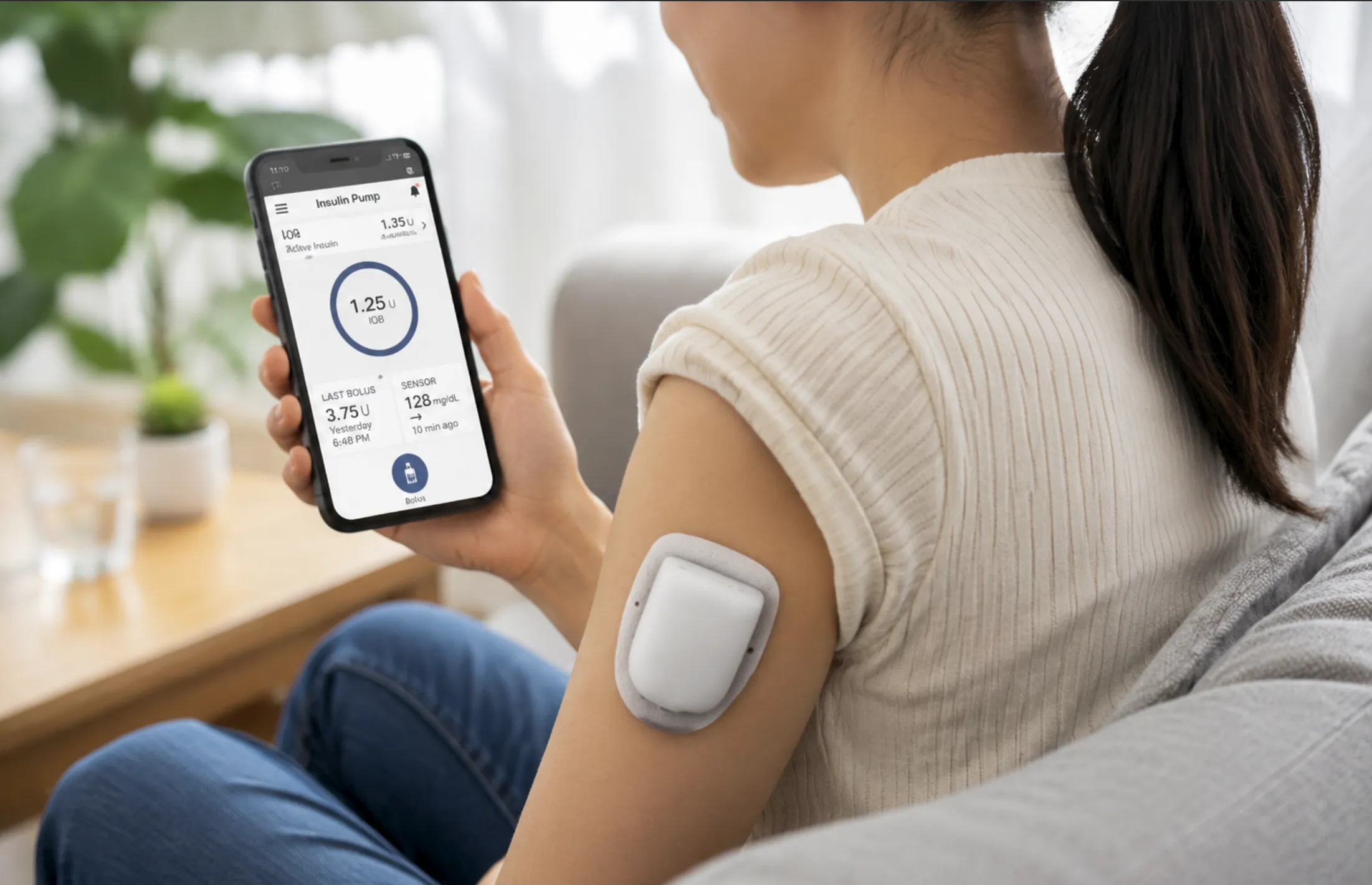
An insulin pump patch looks like a CGM patch with a hole in it, and that resemblance is misleading. The infusion set carries a cannula into the subcutaneous tissue, connects to tubing that is tugged, caught and rolled over during sleep, and must remain stable for two to three days while delivering a fluid path that cannot kink or leak.
Those mechanical and fluid-path requirements change the adhesive stack, the die-cut geometry and the converting controls. This article covers the component side of insulin pump adhesive components: what the stack looks like, where the loads come from, and how to specify tolerances and cleanliness that a pump OEM can actually validate.
Table of Contents
- What Makes Infusion-Set Adhesives Different from CGM Patches
- The Adhesive Stack in a Typical Infusion Set
- Cannula, Hub and Patch Geometry
- Adhesion Under Tubing Load
- Skin-Friendly Options for Multi-Day Wear
- Moisture, Sweat and Showering
- Cleanroom Converting and Packaging for Infusion Sets
- Registration and Tolerance Requirements
- Qualifying a Pump Component Supplier
What Makes Infusion-Set Adhesives Different from CGM Patches
Three differences dominate. First, load: tubing transmits peel and shear forces that a flat sensor patch never sees, and the load is cyclic rather than static. Second, geometry: the patch must accommodate a cannula insertion site, a hub, and often a connector, so the adhesive area is interrupted and the remaining material has to carry more stress per unit width.
Third, consequence of failure: a lifted CGM patch produces unreliable readings, while a lifted infusion patch can interrupt insulin delivery. That raises the bar on edge sealing, on hub bonding, and on the cleanliness of any surface that enters the fluid path.
The Adhesive Stack in a Typical Infusion Set
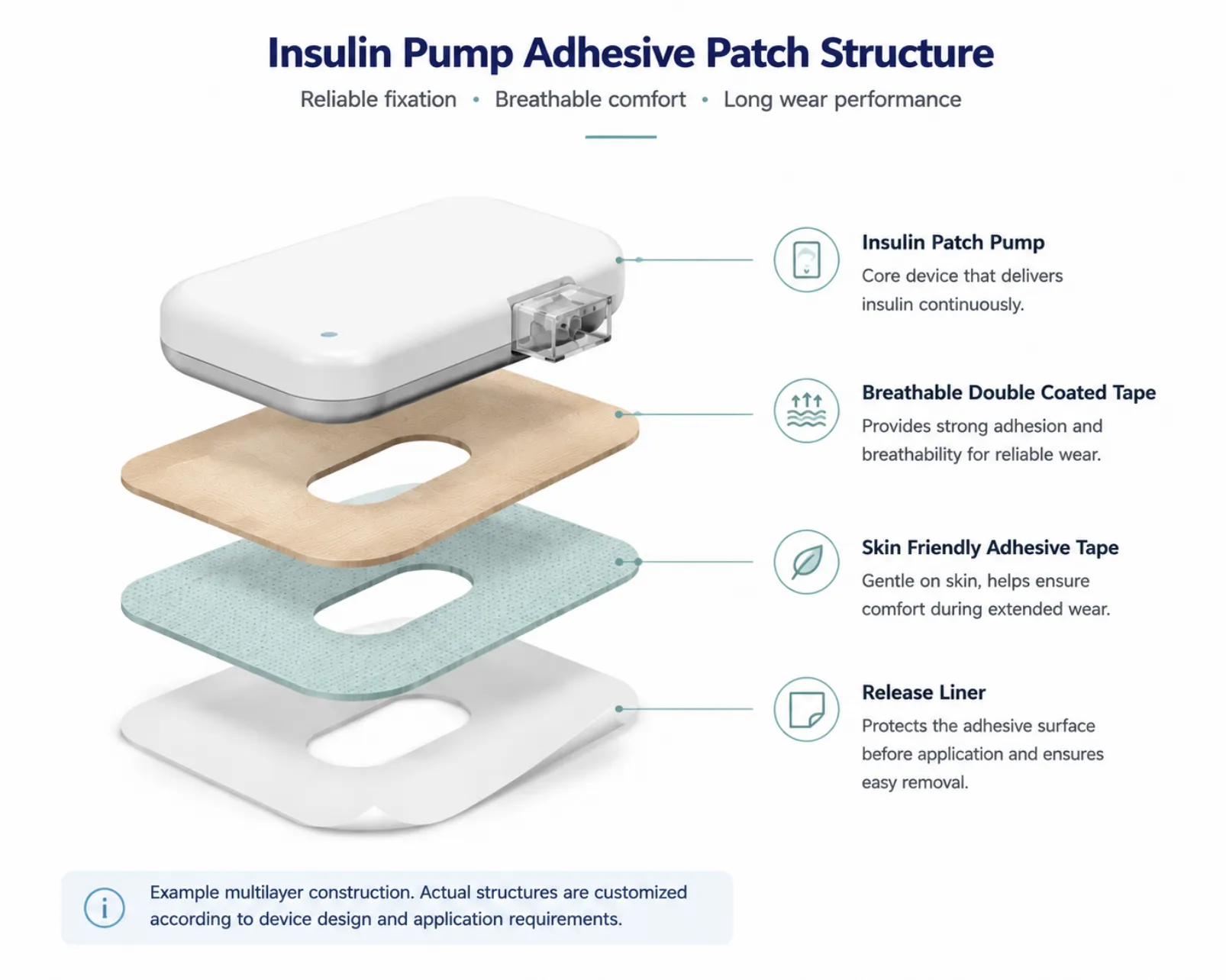
A common construction runs, from skin outward: a skin-contact acrylic or silicone adhesive, a soft carrier film or nonwoven, a stiffening or hub-bonding layer, and a top film that may carry printing and a connector cut-out. A release liner sits underneath, often split for easier application.
Each layer has a function. The skin adhesive governs comfort and wear; the carrier governs conformability and tear resistance around the cannula opening; the stiffening layer spreads tubing load away from the insertion site; the top film provides a printable, cleanable surface. Selecting these independently is a common mistake — they must be balanced as a system.
Cannula, Hub and Patch Geometry
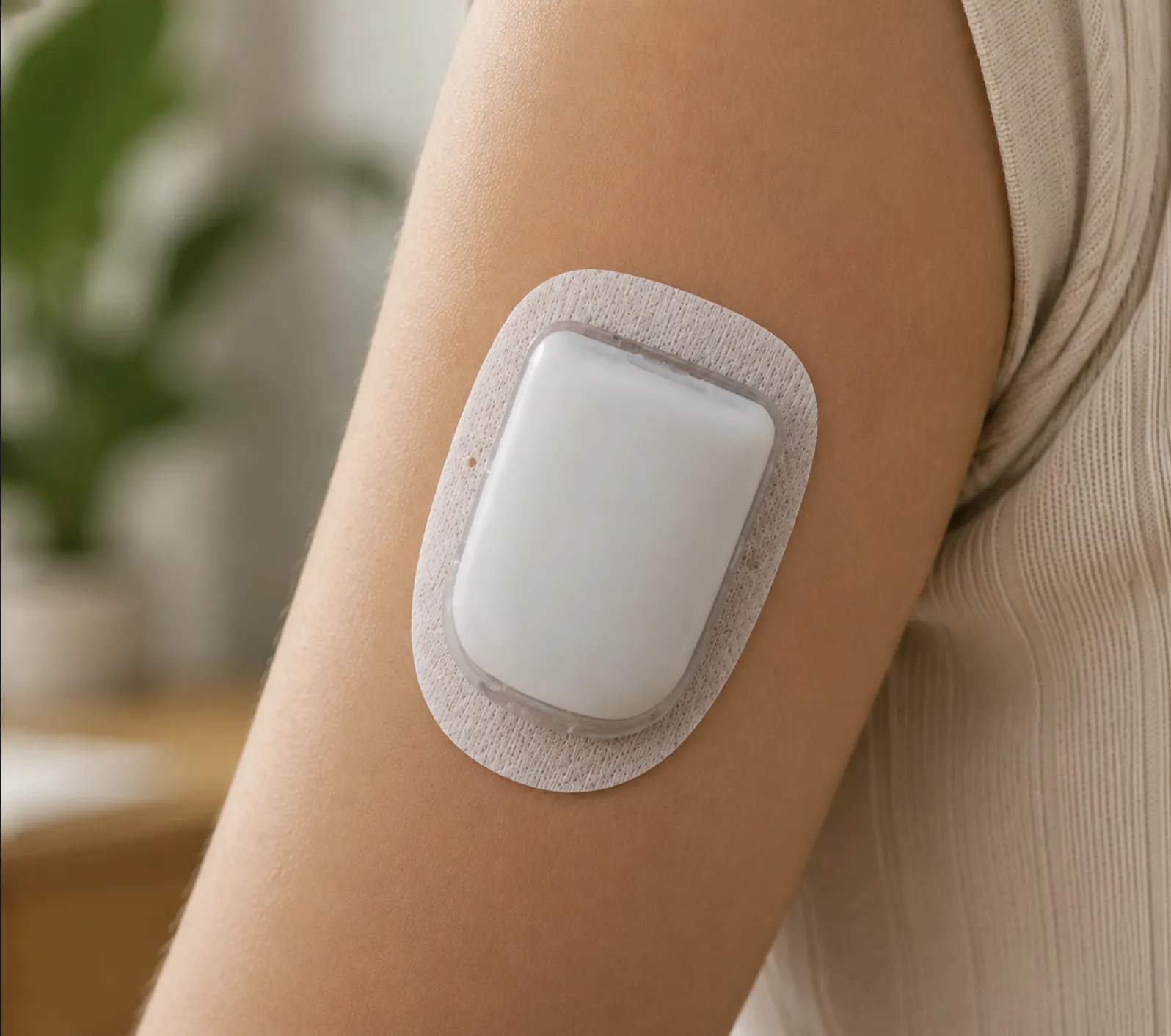
The cannula opening is the highest-risk feature in the part. Its diameter, concentricity and edge quality determine whether the hub seats without compressing the adhesive into the opening, and whether the adhesive flows toward the cannula during wear.
Rotary die cutting handles high volume with tight repeatability around a circular opening; flatbed cutting is better for low volume and for prototype iterations. Either way, the cut edge should be clean with no adhesive smear, and the liner must remain intact so the part presents correctly for automated assembly.
Adhesion Under Tubing Load
Tubing load is directional and repetitive. A patch that resists a slow peel may still fail under a sideways tug repeated hundreds of times. Testing should therefore include static shear at body temperature, dynamic peel with a representative tube angle, and a tether pull test that mimics the actual routing.
Design responses include a larger footprint, a reinforced zone around the connector, a slit or relief feature that decouples tube movement from the adhesive perimeter, and a higher-cohesion adhesive rather than a higher-tack one. The relief feature is a converting decision as much as an adhesive one.
Skin-Friendly Options for Multi-Day Wear
Insulin pump users often wear sites continuously for years, so cumulative skin irritation matters as much as single-wear performance. Silicone adhesives generally produce lower removal trauma and are favoured for sensitive skin; acrylics offer higher initial tack and better cost efficiency. Hybrid constructions and hydrocolloid islands are used where moisture is high.
Breathability interacts strongly with wear duration here, particularly under a device body that traps heat. See our article on patch breathability and moisture management for the underlying mechanisms, which apply equally to pump sites.
Moisture, Sweat and Showering
Water resistance is usually specified as peel after immersion rather than as a bulk material property. A patch may pass immersion testing and still lift in real use, because showering combines water, heat, soap and mechanical rubbing. A short protocol that reproduces those conditions is more informative than a 24-hour soak.
For designs where the hub must stay dry, an integrated frame or a secondary cover may be preferable to a single high-performance adhesive. That is a component architecture decision the converter should be involved in.
Cleanroom Converting and Packaging for Infusion Sets
Infusion components that touch the fluid path or the insertion site are typically converted and assembled in controlled environments. Particle control, waste removal from small openings, and lot traceability all matter. Automated optical inspection for hole quality and adhesive coverage is a practical release criterion.
Packaging interacts with sterilization and with ease of use: a two-piece liner that lets the patient apply the patch without touching adhesive, a carrier card that keeps the hub aligned, or a pouch that survives EtO. A supplier that handles cleanroom converting and assembly can usually propose presentation options together with the part design.
Registration and Tolerance Requirements
The cannula opening to hub interface is usually the tightest tolerance on the drawing, because misalignment causes insertion failures. Adhesive perimeter dimensions can be looser, but not so loose that the patch overlaps a neighbouring feature. Registration between the opening and any printed marker is a separate call-out.
Specify tolerances per feature, and state the measurement method. A blanket ±0.1 mm note on a multi-layer laminate invites either overpricing or arguments at incoming inspection. Our tolerance stack-up article explains how to derive these numbers.
Qualifying a Pump Component Supplier
Look for demonstrated experience with small circular cuts, hub bonding, and tubing-load testing, plus a quality system that supports the device's classification. Ask for capability studies on the critical opening, for the inspection method used, and for change control on material substitutions.
A trial order that includes the real hub and the real tubing is the fastest way to expose problems. Our rapid prototyping route is designed for that stage, and engineering contact can start from a drawing or a physical sample.
Frequently Asked Questions
Can a CGM patch design be reused for an insulin pump?
Rarely without changes. Tubing load, cannula opening and hub bonding all impose requirements a CGM patch does not have, so the stack and the cut geometry usually need to be re-derived.
Which adhesive is usual for infusion sets?
Both acrylic and silicone systems are used. Acrylics dominate where cost and initial tack matter; silicones are preferred for sensitive skin and long cumulative wear. The choice is usually made with the carrier and the hub in view.
How is tubing load tested?
With a tether pull rig that reproduces the tube angle and cyclic loading of real use, ideally at body temperature and after a moisture challenge.
Is a split liner necessary?
Not always, but it improves application accuracy and reduces the chance of the patient touching the adhesive before placement, which is a common cause of early lift.
What cleanliness level applies?
It follows the device's intended use and the manufacturer's risk assessment. Components that enter the fluid path or contact the insertion site typically require controlled environment converting and specific bioburden controls.
How tight should the cannula opening tolerance be?
It should be derived from the hub interface stack-up rather than copied from a generic note, and the measurement method should be agreed before the first lot.
References
- U.S. FDA — 21 CFR Part 820 Quality System Regulation
- Medtronic — official insulin pump and infusion set information
Working on an infusion set patch? Share the hub drawing and Leetoya will assess the cut geometry and stack. Request a drawing review.