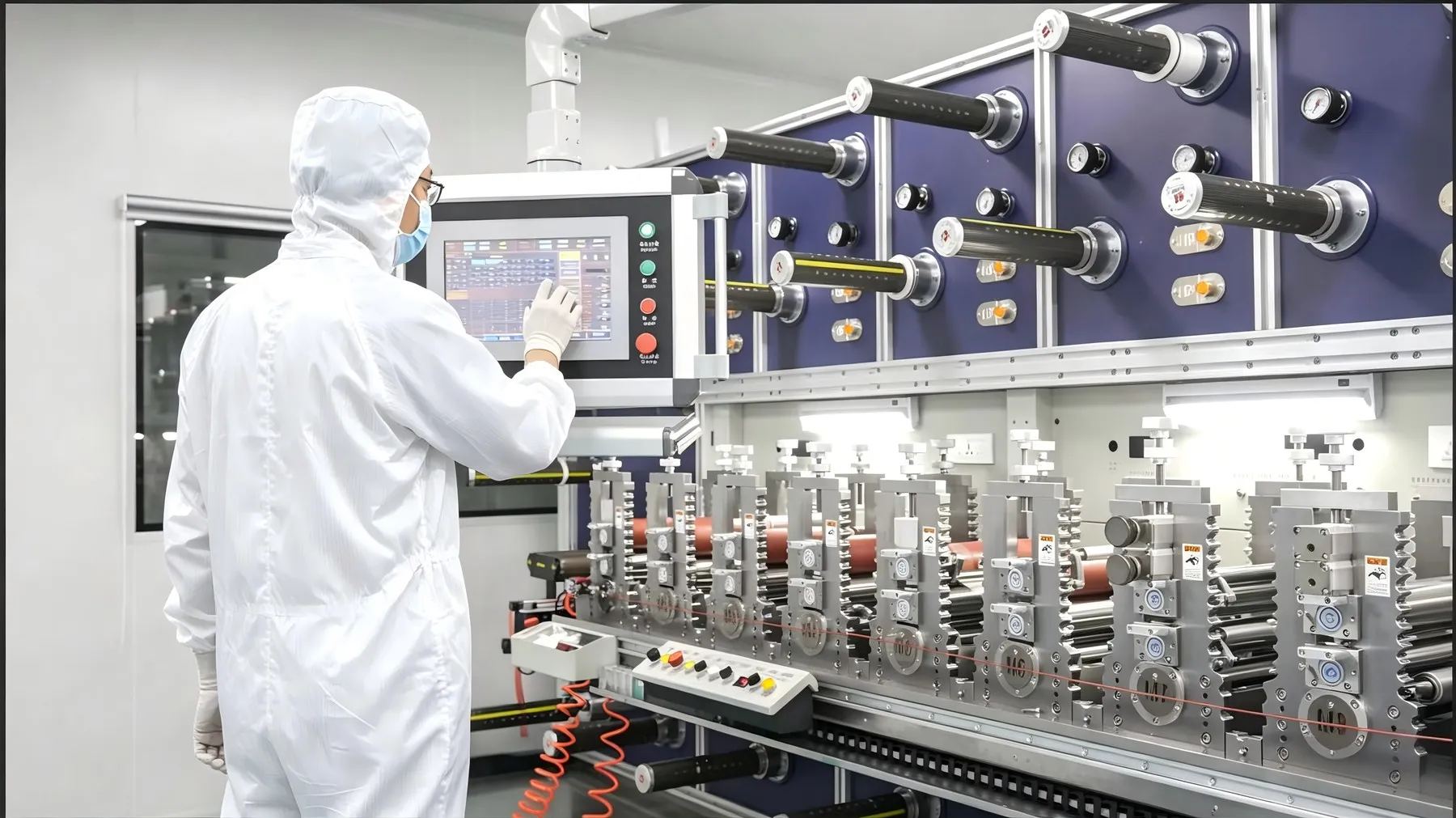
Adhesive selection in a medical device program usually starts with a catalogue and ends with a validation report. Between those two points sit questions about construction, chemistry, release liner, sterility compatibility and supply security that a product code alone cannot answer. Choosing a platform is easier when the requirement is written before the catalogue is opened.
This article gives a selection framework, explains how the major medical tape portfolios differ in character, and describes what it takes to qualify an alternative source without assuming equivalence.
Write Requirements Before Choosing
Six requirements drive most decisions. Wear duration, from a 24-hour sensor to a 14-day patch. Skin condition and moisture exposure, including sweat and showering. Mechanical load, such as repeated flexing at a device edge. Sterilisation method, since gamma and ethylene oxide affect adhesive chemistry differently. Converting process, since cut, slit and laminate behaviour differ by construction. And regulatory documentation depth, which determines how much testing the device team must repeat.
Write these down before opening any supplier catalogue. A platform that satisfies five requirements and fails the sixth is not a candidate, and the catalogue will not tell you which one fails.
The Five Platform Constructions
The first construction is single-coated tape: adhesive on one side, carrier on the other, with a release liner. It is used where the carrier faces outward and only one surface bonds. The second is double-coated tape: adhesive on both sides, used to bond two layers together, which is the standard construction for CGM patch assemblies and spacer tapes.
The third is transfer adhesive: an adhesive film with no carrier, supplied on a liner and laminated onto a substrate during converting. It gives the thinnest possible bond line and is common in diagnostic strips where thickness matters. The fourth is foam or nonwoven tape: a compressible core with adhesive on both sides, used for cushioning and conformability at high-motion sites. The fifth is hydrocolloid or gel constructions, which absorb moisture and are used where skin maceration is the dominant risk.
Each construction has a mechanical signature: peel strength, shear resistance and conformability trade off against each other. A high-peel double-coated tape is usually stiff; a conformable foam is usually lower in shear resistance.

How Major Portfolios Differ
3M's medical materials range is broad and heavily documented. It covers single-coated, double-coated and transfer constructions across polyester, polyurethane, nonwoven and foam carriers, with published technical data on peel, shear and moisture vapour transmission. The practical advantage for a device team is the depth of documentation and the availability of the same construction in multiple regions, which simplifies a global supply chain.
Nitto Denko's medical adhesive range is similarly broad and is known for adhesive polymer engineering, including acrylic and silicone chemistries developed for skin contact. Its documentation is detailed on chemistry and coating, and the portfolio supports both tapes and adhesive transfer films.
Lohmann's position is as a medical tape specialist with a strong focus on custom coating and converting-adjacent services, which makes it useful where a standard construction needs modification rather than substitution.
The differences that matter to a buyer are not chemistry claims but supply characteristics: minimum order quantity, regional availability, change notification practice, willingness to share coat weight data, and how quickly a technical question gets answered by an engineer rather than a distributor.
Alternative Sources and When to Use Them
Alternative sources fall into three groups. Regional coaters producing standard constructions under their own documentation. Custom coaters that develop a construction to a specification, which is useful for thickness or liner requirements not available off the shelf. And converters that buy master roll material and slit, laminate or die-cut it into components, which is a different role from supplying the adhesive itself.
The case for alternatives is usually supply security, lead time, cost at volume, or a construction gap. The case against is documentation depth and the risk of subtle differences that only appear in aging or sterilisation testing.
A realistic strategy is dual qualification rather than dual sourcing on paper: qualify a second material to the same specification with the same test methods, and keep it approved but not necessarily in routine production. That preserves leverage without carrying two inventories.
Equivalence Is a Test, Not an Assumption
Two tapes with the same nominal chemistry and thickness are not necessarily equivalent. Coat weight, adhesive molecular weight distribution, liner release force and surface treatment can all differ, and each shows up somewhere in the device lifecycle.
A practical equivalence program covers four areas. Physical: thickness, coat weight, peel and shear on the device substrate. Chemical: spectroscopy comparison and extractables screening where the device is skin-contact or diagnostic. Aging: accelerated and real-time stability on the finished component. Process: a converting trial at production speed, measuring cut quality, registration and yield.
Only after all four can a second source be called equivalent. Skipping the process trial is the most common shortcut, and it is the one that produces scrap during the first real production run.
Converting Implications by Platform
Transfer adhesives demand clean release and precise lamination because there is no carrier to absorb variation. Foam constructions compress under the die, so cut dimensions must be set with the compression in mind. Double-coated tapes require liner stability across slitting, or the two liners separate at the edge during winding.
Silicone adhesives are softer and more prone to blocking on the roll; they usually need a tighter tension window and sometimes a different liner. Acrylic constructions are more forgiving in converting but can build tack against the die, which requires attention to die surface and cooling.
These process realities mean the material selection and the converter selection should happen together. A material approved in isolation may not run at the required line speed.
Evaluation Checklist
Ask each candidate supplier for: construction and chemistry documentation with measured values, not ranges; coat weight control data across the web; liner specification and release force; sterilisation compatibility statement; regulatory support documents including biocompatibility test summaries where available; change notification commitment; and a reference for a comparable device program.
Score responses against the six requirements written at the start. A supplier that answers four of six well and is evasive on the rest is telling you something useful.
For the device-side context of these materials, see our medical materials library and the acrylic versus silicone comparison for CGM patches.
Frequently Asked Questions
Is a 3M or Nitto tape automatically better than a regional alternative?
No. Major portfolios offer documentation depth and global availability, which reduces program risk. A regional alternative can meet the same specification if it is qualified with the same test methods, including a production-speed converting trial.
What is the difference between a single-coated and a double-coated tape?
Single-coated tape has adhesive on one side and bonds one surface. Double-coated tape has adhesive on both sides and bonds two layers together, which is the standard for patch and spacer assemblies.
Do silicone and acrylic adhesives need different converting setups?
Yes. Silicone adhesives are softer and more prone to blocking, so tension control and liner choice differ. Acrylic adhesives build tack against tooling and may need die surface or cooling adjustments.
How do I prove a second material source is equivalent?
By physical, chemical, aging and process testing. All four are needed. Skipping the production-speed converting trial is the most common and most expensive shortcut.
Should we dual source from the start?
Dual qualification is usually better than dual inventory. Qualify a second material to the same specification and keep it approved, then move production to it only if supply requires.
Does sterilisation affect adhesive selection?
Yes. Gamma and ethylene oxide interact differently with adhesive chemistry and can change peel and shear values. The sterilisation method must be part of the selection requirement, not a later step.
Conclusion
Platform selection is a requirements exercise, brand selection is a supply exercise, and equivalence is a testing exercise. Teams that separate the three make faster decisions and fewer late surprises. Teams that start with a catalogue number inherit whatever assumptions came with it.
Leetoya converts medical adhesive components from qualified material platforms, including 3M, Nitto and Lohmann constructions, and can support equivalence and process trials at production speed. See materials and capabilities.
Discuss your material requirements. Send wear duration, sterilisation method and the substrate stack, and we will propose two constructions with the trade-offs stated. Contact our engineering team.