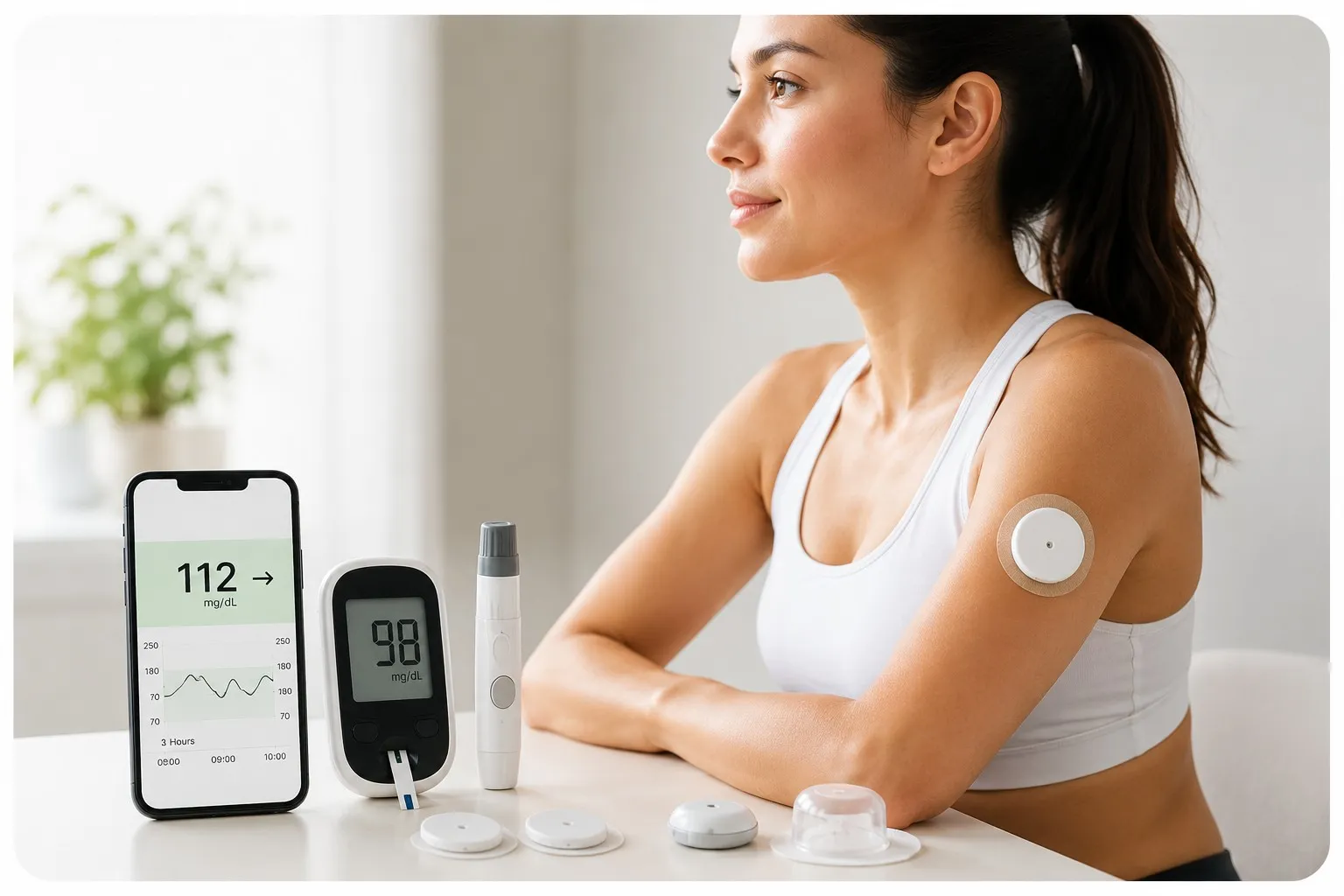
World Diabetes Day 2026 falls on 14 November, and this year's campaign carries the theme "Early action on diabetes" under the hashtag #ActEarlyOnDiabetes. The message is direct: earlier detection, earlier intervention and better daily management change long-term outcomes for millions of people living with diabetes. But early action does not happen by itself. It depends on reliable, comfortable and affordable diabetes monitoring technology that people can actually use at home, at work and during everyday life. In this article, we explain why monitoring technology is central to the 2026 early-action agenda, how fingerstick blood glucose meters (BGM) and continuous glucose monitors (CGM) differ, and how the precision adhesive components behind these devices make consistent readings possible.
Table of Contents
- Why World Diabetes Day 2026 Centers on Early Action
- How Large Is the Gap in Diabetes Detection Today
- The Two Monitoring Technology Pathways: BGM and CGM
- Why Monitoring Hardware Depends on Precision Adhesive Components
- BGM vs CGM at a Glance
- The Technology Trend Behind Earlier Action: Longer Wear, Calibration and Alerts
- How Leetoya Supports Diabetes Monitoring Manufacturing
- Frequently Asked Questions
Why World Diabetes Day 2026 Centers on Early Action
World Diabetes Day, established by the International Diabetes Federation (IDF) and the World Health Organization, is observed every year on 14 November. The 2026 campaign theme, "Early action on diabetes," reframes prevention and diagnosis as a time-sensitive challenge: identifying risk early, confirming diagnosis early, and giving people tools that make daily management less burdensome. The campaign encourages clinicians, device makers, employers and communities to act before complications develop, because cardiovascular disease, nerve damage, kidney disease and vision loss often emerge silently over years of uncontrolled blood glucose.
Early action has two sides. The first is population-level: reaching people who do not yet know they are at risk, and screening them before symptoms become obvious. The second is individual-level: once a person is diagnosed, monitoring technology must produce trustworthy readings that guide diet, activity and medication decisions. Without a dependable measurement loop, even the best clinical plan loses its anchor. That is why the quality of glucose measurement hardware, and of the adhesive components that hold it on the body or assemble the test strip, deserves more attention in the early-action conversation.
For manufacturers building diabetes devices, the early-action theme translates into concrete engineering goals: lower-friction measurement routines, sensors that stay on during showers, exercise and sleep, strips that deliver consistent channel geometry, and components that can be produced at the scale required to serve both high-income markets and price-sensitive regions. You can explore the full range of diabetes monitoring applications we support on our site, from CGM fixation patches to BGM spacer tapes and pump fixation components.
How Large Is the Gap in Diabetes Detection Today
The scale of the opportunity — and the urgency behind World Diabetes Day 2026 — comes from the numbers published by the IDF and WHO. According to the IDF, approximately 589 million adults are living with diabetes, and more than 40% remain undiagnosed. Around 635 million adults are estimated to be at high risk, and projections suggest the global adult population with diabetes could reach 853 million by 2050. A core campaign target is to raise the share of people diagnosed and connected to care, with the IDF working toward 80% diagnosis coverage by 2030.
The undiagnosed share matters because many people live with elevated glucose for years before any symptom forces a check. In the United States, CDC data cited by Future Market Insights estimates 40.1 million adults with diabetes alongside 115.2 million with prediabetes — a large population that could benefit from earlier screening and, where appropriate, monitoring devices. Undiagnosed and under-monitored people are precisely the group the early-action agenda aims to reach.
Closing this gap needs more than awareness campaigns. It needs monitoring technology that is accessible enough to deploy broadly, accurate enough to act on, and comfortable enough that people keep using it between clinic visits. This is where device design, materials selection and precision converting all intersect: a meter or sensor that is painful, unreliable or falls off after a day will not support sustained early action, no matter how strong the clinical evidence behind it.
The Two Monitoring Technology Pathways: BGM and CGM
Today's diabetes monitoring landscape rests on two complementary technologies. Blood glucose monitoring (BGM) uses a portable meter and disposable test strips: a small blood sample, typically from a fingerstick, reacts with reagents on the strip, and the meter converts the electrochemical signal into a glucose reading. Continuous glucose monitoring (CGM) uses a tiny interstitial-fluid sensor worn on the upper arm or abdomen, paired with an adhesive patch that holds the sensor in place for an extended wear period.
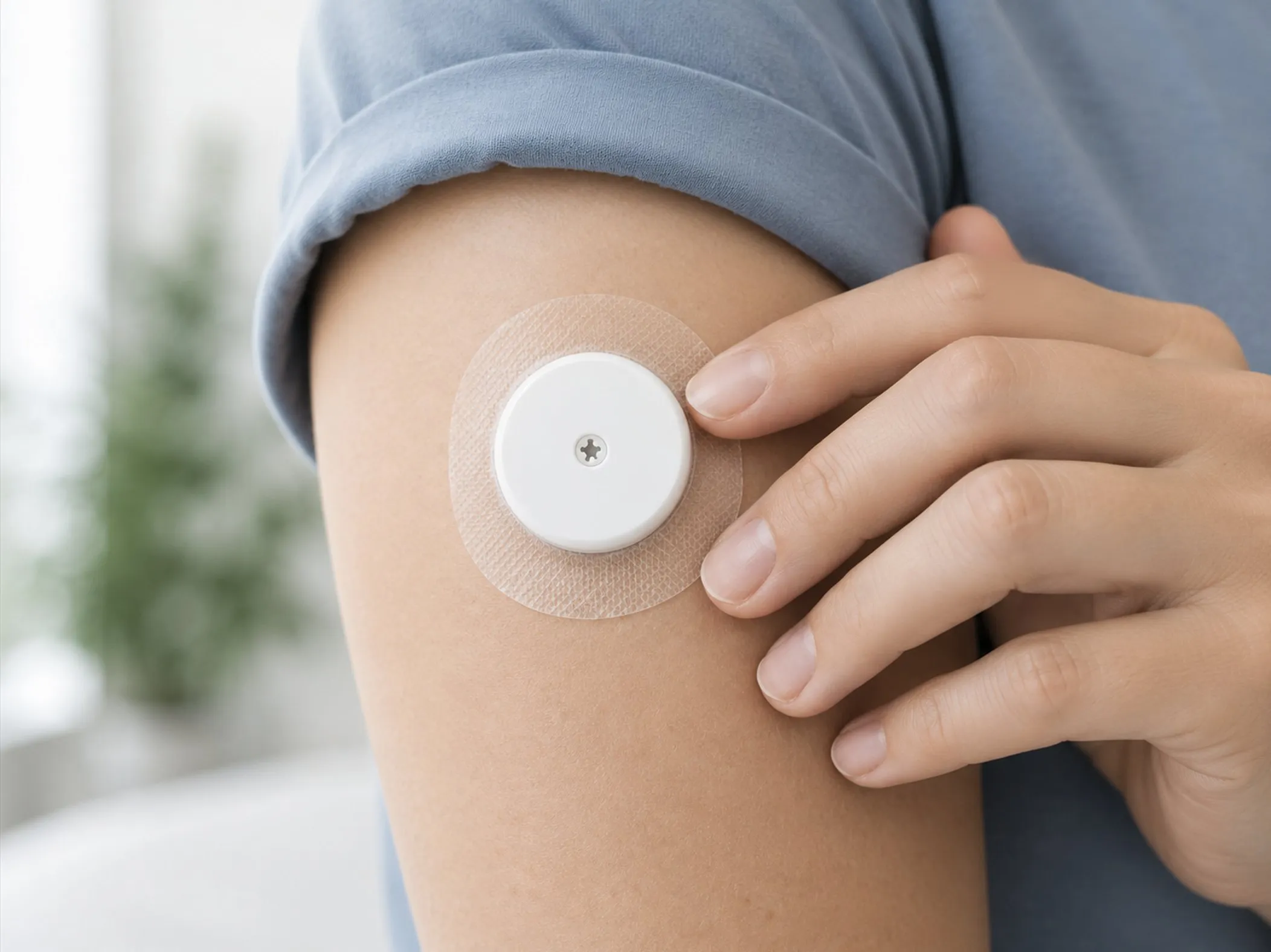
BGM remains the backbone of point-in-time measurement worldwide, especially where cost and simplicity matter most. A single strip reading reflects glucose at that moment, and users typically check before meals, after meals, or when symptoms suggest a low or high reading. CGM, by contrast, streams readings at short intervals through the day and night, revealing trends, overnight patterns and post-meal spikes that isolated fingersticks can miss. Many people use both: CGM for trend awareness and alerts, and BGM for spot confirmation when readings look unusual.
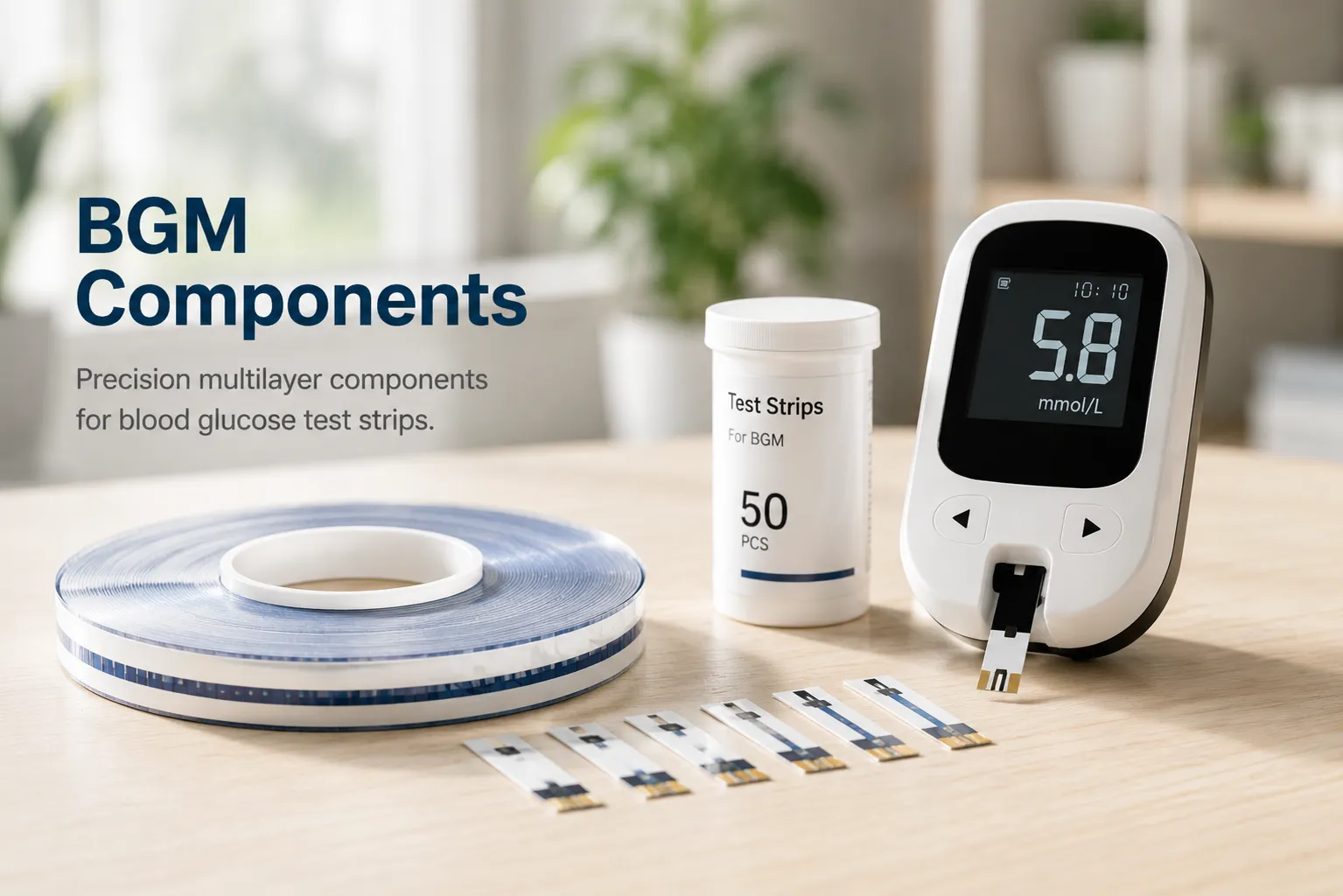
Both pathways depend on precision-converted consumables. A CGM device only stays on the body if its fixation patch holds through sweat, friction and showering; a BGM strip only produces a repeatable signal if its spacer tape, hydrophilic cover film and channel geometry are held to tight tolerances. These consumables are the unsung engineering layer between the sensor electronics and the patient.
Why Monitoring Hardware Depends on Precision Adhesive Components
A glucose monitor is often judged by its screen, but its reliability is decided by layers most users never see. On the CGM side, the overpatch and fixation overlay must bond to skin without lifting at the edges, breathe enough to prevent maceration, and remove gently enough to avoid skin injury. On the BGM side, spacer tapes define the blood channel that draws sample into the reagent area, while hydrophilic cover films spread the sample evenly and release liners keep the adhesive protected until use.
These components are produced through medical die cutting, multi-layer laminating, precision slitting and cleanroom converting processes that turn adhesive-coated films, nonwovens, hydrocolloids and TPU carriers into finished consumables. Registration between layers, adhesive coat weight, edge quality and liner release behavior all affect whether the final device performs consistently across millions of units. Even a small dimensional error in a BGM channel can change sample flow and introduce reading variability; a patch that delaminates early can interrupt a CGM wear cycle and force an early sensor replacement.
For device teams, this means the adhesive component is not a commodity afterthought. It is a designed part with its own material specification, tolerance budget and validation plan. Our medical products portfolio covers both the wearable fixation side and the diagnostic strip side, and we work with device manufacturers to match adhesive choice to wear duration, skin type and removal requirements.
BGM vs CGM at a Glance
The two technologies serve different roles in early action and daily management. The comparison below summarizes how they differ on sampling, data output, wear time, alerts and typical users.
| Dimension | BGM (Fingerstick Meter + Strips) | CGM (Continuous Sensor + Patch) |
|---|---|---|
| Sampling method | Single blood sample per fingerstick | Interstitial fluid measured at short intervals, day and night |
| Data output | One point-in-time reading per strip | Continuous trend curve, history and directional arrows |
| Wear / consumable cycle | One strip per reading; meter reused | Sensor worn for an extended period; fixation patch replaced with sensor |
| Alerts | None built into the strip; meter shows current value | Can alert on high, low and predictive glucose trends |
| Skin contact | Minimal; only fingerstick site | Ongoing skin contact via adhesive patch |
| Best suited to | Spot checks, cost-sensitive markets, confirmation readings | Trend awareness, overnight monitoring, active lifestyles, insulin users |
| Key converted components | Spacer tapes, hydrophilic cover films, liner-protected adhesives | Overpatches, reinforcement overlays, fixation adhesives, release liners |
Neither pathway replaces the other. Early-action programs often combine broad BGM access for screening and routine checks with CGM where continuous data improves control, particularly for people on insulin or with fluctuating glucose patterns.
The Technology Trend Behind Earlier Action: Longer Wear, Calibration and Alerts
Monitoring technology has moved steadily toward less burden and more insight. Market analysis tracked by Intel Market Research values the CGM market at roughly US$13.5 billion in 2025, about US$14.8 billion in 2026, and projects growth toward US$30 billion by 2034 at a compound annual growth rate near 10.7%. Within that growth, several engineering trends directly support the early-action mission.
First, longer wear. Sensors designed for 14 to 21 days reduce how often users must re-apply a patch or prick a finger, which improves adherence and makes monitoring a quiet background habit rather than a daily chore. Longer wear raises the bar for adhesive durability: the patch must resist sweat, friction and showering while remaining gentle on repeated skin contact. Second, factory-calibrated sensors reduce the need for routine fingerstick calibration; market demand trends indicate roughly 68% of demand now favors factory-calibrated designs. Third, software-side AI predictive alerts flag likely highs and lows before they become urgent events, which is the kind of early warning the early-action theme is built around. Accuracy continues to improve too, with leading systems targeting MARD (mean absolute relative difference) below 9%.
These trends all push component engineering forward. Longer-wear patches demand breathable, conformable backings and adhesives that retain peel force over days; factory calibration depends on consistent strip and sensor geometry; predictive alerts are only as trustworthy as the underlying measurement chain. As a converter serving wearable medical devices and diagnostics, we see these requirements translated into material selections, tolerance targets and inspection plans before production ever begins.
How Leetoya Supports Diabetes Monitoring Manufacturing
Leetoya Precision (Dongguan Leetoya) is a medical die cutting and cleanroom converting manufacturer supplying medical device, diagnostics and wearable manufacturers. Our diabetes-related output includes custom CGM adhesive patches for sensor fixation, BGM adhesive components such as spacer tapes and hydrophilic cover films, and adhesive components for wearable insulin delivery. We operate under an ISO 13485 medical device quality management system, alongside ISO 9001, ISO 14001 and ISO 45001 certifications, and convert in an ISO Class 7 (Class 10,000) cleanroom environment.
Our production scale reflects the demands of diabetes monitoring: more than 40 million CGM patches per year and more than 5 billion BGM components per year. For new programs, we offer rapid prototyping with 3–7 day sample delivery, so engineering teams can validate materials, adhesion and geometry before committing to full tooling. Our process spans rotary, flatbed and laser die cutting, kiss cutting, island placement, multi-layer laminating, precision slitting, medical printing, packaging and assembly, plus AOI inspection for dimensional and visual verification. You can read more about our quality system and certifications on the About Leetoya page.
World Diabetes Day 2026 is a reminder that early action depends on technology people can rely on every day. Whether you are designing a next-generation CGM sensor, a new BGM strip platform or a wearable insulin delivery device, the adhesive and converted components behind it deserve the same engineering rigor as the electronics.
Frequently Asked Questions
What is the theme of World Diabetes Day 2026?
The World Diabetes Day 2026 theme is "Early action on diabetes," promoted by the International Diabetes Federation under the hashtag #ActEarlyOnDiabetes, observed on 14 November. The campaign focuses on earlier detection, earlier intervention and better daily management to reduce long-term complications.
How many people are affected by diabetes worldwide?
According to IDF figures cited for the 2026 campaign, about 589 million adults live with diabetes, more than 40% are undiagnosed, around 635 million are at high risk, and the global total is projected to reach 853 million by 2050. These figures underscore why early detection and monitoring access remain urgent priorities.
What is the difference between BGM and CGM monitoring?
BGM produces a single reading from a fingerstick blood sample on a disposable test strip, while CGM measures interstitial fluid continuously through a worn sensor and patch, delivering trend curves and alerts. BGM is commonly used for spot checks and confirmation, whereas CGM supports ongoing trend and overnight monitoring.
Why do adhesive components matter in glucose monitoring?
Adhesive patches hold CGM sensors on the body through sweat, friction and daily wear, while BGM spacer tapes and hydrophilic films define sample flow and spread across the strip. Poor adhesion or inconsistent geometry can interrupt wear cycles or introduce reading variability, so these components are engineered to tight tolerances and validated alongside the device.
How can Leetoya help my diabetes device program?
We manufacture custom CGM adhesive patches, BGM adhesive components and insulin pump fixation parts from prototype to cleanroom production, supported by ISO 13485 quality controls and our ISO Class 7 cleanroom. If you have a design or drawing you would like reviewed, you can request a quote and engineering review through our contact page, and our engineering team will respond with material and process recommendations.
Conclusion
World Diabetes Day 2026 makes the case for early action, and early action rests on monitoring technology that is accurate, comfortable and available at scale. BGM and CGM together form the measurement layer that turns population awareness into individual care decisions, and their performance depends on precisely converted adhesive and diagnostic components. At Leetoya, we support this mission with medical-grade materials, controlled cleanroom production and prototype-to-production engineering. To discuss your diabetes monitoring component requirements, send your drawings or design brief via our request a quote page and start the engineering review today.