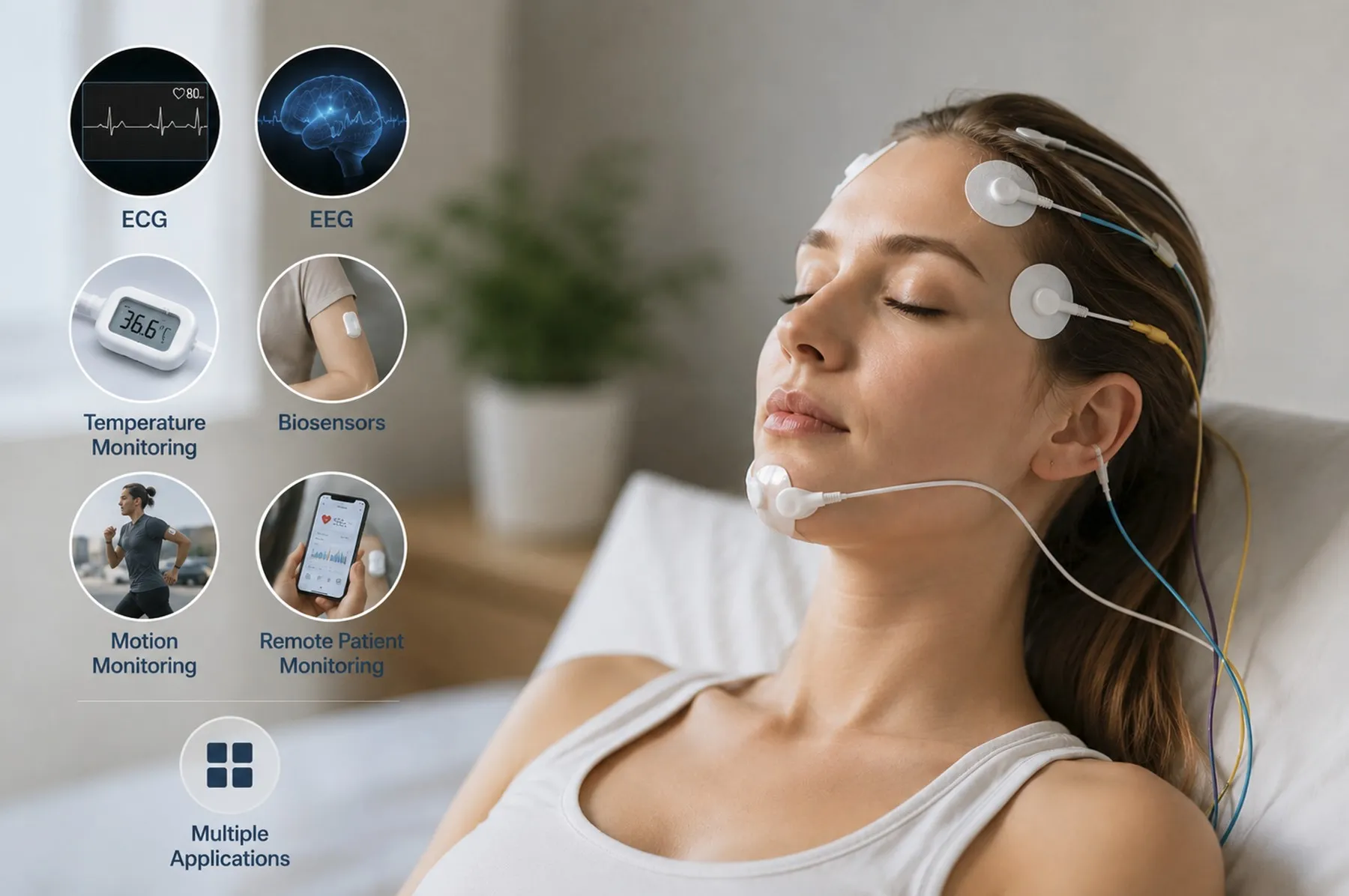
Medical adhesive-related skin injury (MARSI) is skin damage caused when an adhesive dressing, tape or wearable device is removed, and it has become a central concern as more treatment and monitoring move onto the body. MARSI is generally defined as erythema or skin abnormality that persists at least 30 minutes after adhesive removal; it can range from temporary redness to stripping of the epidermis, blistering or pain at the removal site. For patients wearing wearable medical devices such as CGM sensors, insulin delivery patches and cardiac or biosensor monitors, repeated adhesive contact over days makes prevention a design requirement rather than a clinical afterthought. This article explains the main MARSI types, how adhesive chemistry and breathable construction reduce skin trauma, and what device teams should specify to protect patients without sacrificing secure fixation.
Table of Contents
- What Medical Adhesive-Related Skin Injury Is
- Why Wearable Devices Raise the MARSI Stakes
- The Four Common MARSI Types and How to Prevent Them
- Material Strategies: Silicone, Hydrocolloid and Breathable Design
- Design and Application Practices That Reduce Skin Trauma
- How Adhesive Choice Affects Reapplication and Removal
- Supporting Safer Wearable Fixation in Production
- Frequently Asked Questions
What Medical Adhesive-Related Skin Injury Is
Medical adhesive-related skin injury occurs when the adhesive bond to skin is stronger than the skin's own surface layer, so removal tears or irritates the epidermis. Clinical literature and MARSI guidance — including the 3M MARSI awareness materials and comparative studies published in journals such as Dove Medical Press's Medical Devices: Evidence and Research — describe MARSI as skin abnormality, including erythema, that remains visible at least 30 minutes after the adhesive has been taken off. The injury may show as redness, peeling, blistering, abrasion or tenderness, and it can increase discomfort, raise infection risk and make patients reluctant to wear their device.
MARSI is not a single failure mode. It arises from a combination of adhesive strength, skin condition, wear duration, skin preparation and removal technique, and it is most likely where adhesives are left on for days, reapplied frequently, or removed quickly against the skin's grain. Older, dehydrated or fragile skin, frequent bathing and underlying illness can lower the skin's tolerance, while over-the-counter tapes and aggressive acrylic adhesives are more likely to strip surface cells during peel.
For medical device manufacturers, the implication is that skin safety must be engineered into the fixation component. The patch or tape should hold the device securely, breathe with the skin and release gently, rather than relying on the patient to avoid injury during removal.
Why Wearable Devices Raise the MARSI Stakes
Wearable medical devices concentrate adhesive contact in ways that hospital dressings do not. A sensor or pump patch sits on the same area of arm, abdomen or chest for days at a time, moving with the body during sleep, exercise and washing, and the area is often covered by clothing that rubs at the edges. When the wear cycle ends, the adhesive must peel away without taking skin with it — and in programs that require reapplication, the same skin may be exposed to adhesive removal repeatedly over weeks.
Longer-wear sensors, in particular, push both holding power and gentleness in opposite directions. A patch that stays on for 14 to 21 days needs strong edge resistance to sweat and friction, yet the removal must still be gentle enough not to traumatize skin that has been occluded for an extended period. Breathability matters here: trapped moisture under a non-breathable backing softens the epidermis, making it more vulnerable to stripping when the adhesive releases.
Patients with diabetes, older adults and people with sensitive skin are among the groups most likely to experience adverse skin reactions, and repeated skin injury can interrupt monitoring or therapy. Device teams therefore evaluate adhesives not only on initial tack and wear time, but on removal behavior, reapplication compatibility and the patch's ability to let vapor escape. This broader view of fixation safety overlaps closely with wound care principles, where gentle contact and moisture balance have long been central.
The Four Common MARSI Types and How to Prevent Them
Clinically, MARSI is commonly grouped into mechanical injury, contact dermatitis, maceration and folliculitis. Each has distinct causes and different prevention levers, summarized in the table below.
| MARSI type | Typical cause | How it appears | Prevention focus |
|---|---|---|---|
| Mechanical skin injury (stripping, tension) | Adhesive bond stronger than skin; fast or pulling removal | Peeling, abrasion, epidermal lifting at removal | Gentle-removal adhesive, low-trauma peel instructions, conformable backing |
| Contact dermatitis | Irritation or allergic reaction to adhesive chemicals, additives or residue | Redness, itching, rash localized to adhesive area | Hypoallergenic adhesive chemistry, material qualification, minimal adhesive residue |
| Maceration | Trapped moisture under an occlusive patch softens skin | Pale, wrinkled, fragile skin around the site | Breathable backing, moisture-vapor-permeable design, correct wear duration |
| Folliculitis | Hair follicles inflamed by adhesive pressure or repeated shear | Tiny inflamed bumps around follicles | Smooth low-tension structure, gentle removal, site care guidance |
Preventing MARSI usually means addressing more than one of these at once: the adhesive must be gentle, the backing breathable, and the overall structure low-tension enough to avoid pulling skin with every movement.
Material Strategies: Silicone, Hydrocolloid and Breathable Design
Material selection is the primary engineering lever against MARSI. Silicone adhesives are widely recognized for gentle skin contact: they bond to skin without aggressively clinging to surface cells, peel away smoothly and reapply well when the fixation needs adjustment. Comparative oximeter-tape research cited in the Dove Medical Press study found that silicone removed roughly 75% less protein from skin than an acrylic option and retained about 85% of its peel force after 18 reapplications, supporting its suitability for repeated-contact use. Silicone dressings and tapes have also been associated with lower MARSI incidence in clinical comparisons.
Hydrocolloid adhesives absorb wound exudate and maintain a moist, protective interface, which can be valuable in foam-backed or moisture-managing structures, particularly where the contact site needs cushioning. Acrylic adhesives remain common where strong, cost-efficient hold is the priority, but they are generally less forgiving on sensitive or fragile skin and warrant careful removal technique. Backing choice complements the adhesive: nonwovens and breathable films conform and allow vapor escape, while TPU films offer stretch and elasticity that flex with body movement.
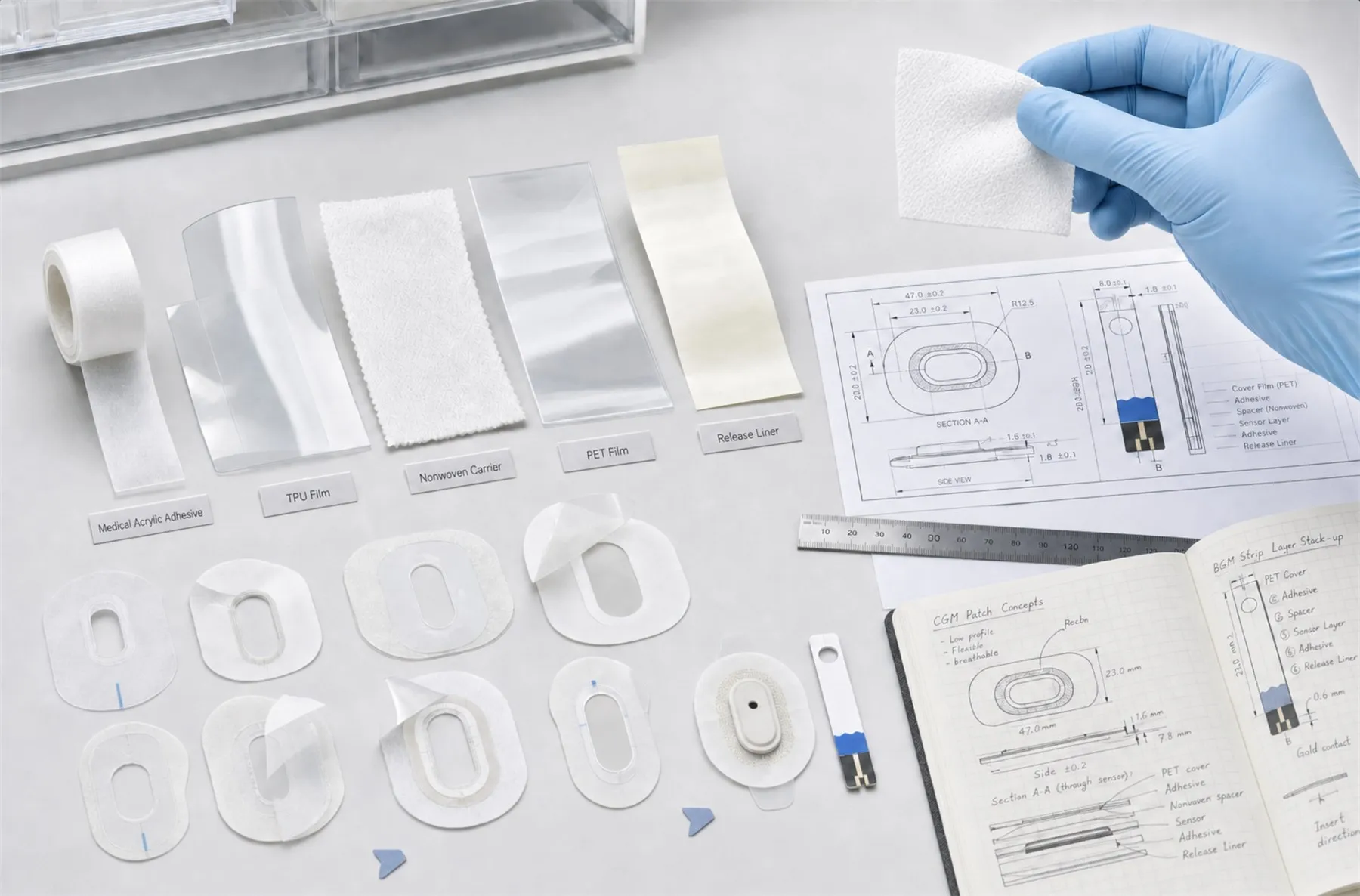
During material evaluation, engineers compare candidates on tack, peel force, breathability, conformability and removal behavior, matching the adhesive to the wear duration and intended skin population. The full medical adhesive materials platform — acrylics, silicones, hydrocolloids, nonwovens, TPU films, foams, hydrophilic films and liners — gives device teams a range of options to balance hold and gentleness rather than choosing between a harsh strong adhesive and one that fails to stay on.
Design and Application Practices That Reduce Skin Trauma
Adhesive chemistry alone does not eliminate MARSI; device and patch design contribute as well. A patch with generous edge radii and a tapered, conformable backing reduces stress concentration where skin bends, while a structure that moves with the body avoids shear that inflames follicles. Breathable, moisture-vapor-permeable layers reduce the maceration risk that comes with prolonged occlusion, and a reinforcement overlay can protect the sensor base without increasing total adhesive area unnecessarily.
Application and removal guidance is part of the patient-facing design. Site preparation should avoid leaving oily residue that compromises adhesion and forces rework; applying the patch without stretching the backing keeps tension off the skin; and removal should be performed slowly, peeling the adhesive back over itself parallel to the skin rather than yanking upward. Where a device is reapplied, alternating sites and allowing the skin to rest between wear cycles reduces cumulative trauma.
Manufacturers can also reduce risk by specifying the minimum adhesive area needed for secure hold, avoiding adhesive formulations with known irritants, and validating the chosen structure on representative skin conditions before market release. The goal is a fixation system that holds reliably but does not treat skin as the strongest layer in the bond.
How Adhesive Choice Affects Reapplication and Removal
For devices that require repeated reattachment, reapplication performance is a key safety metric. An adhesive that loses peel force after a few reapplications leads to loose edges and early sensor replacement, while one that remains aggressively bonded after many cycles increases removal trauma. Silicone's combination of gentle release and retained peel force makes it a common choice where users adjust or replace fixation often, such as athletic users or sensitive-skin patients.
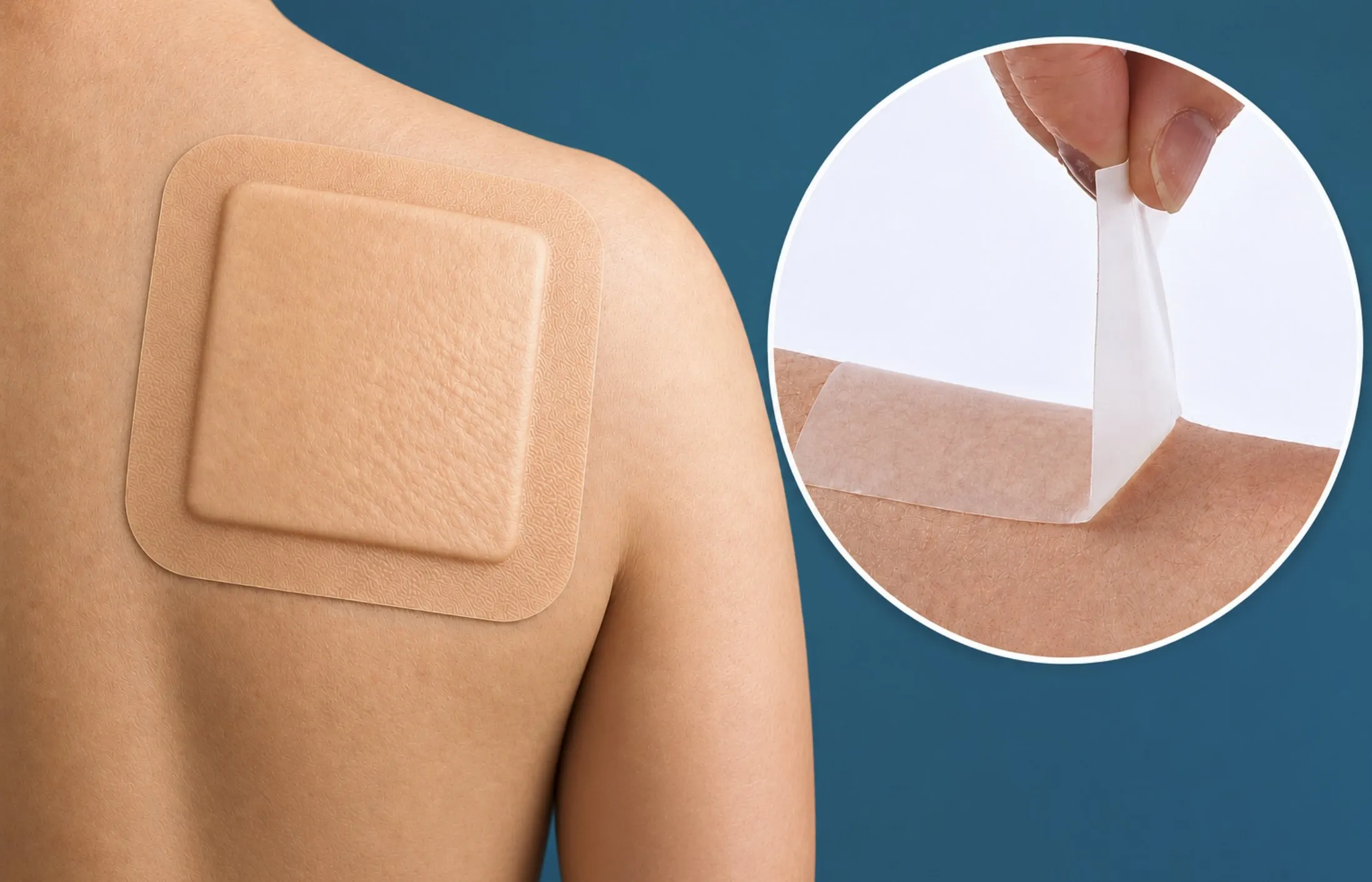
The removal interface also matters in related wound care and securement applications, where protecting peri-wound skin prevents secondary injury. Converters working on these parts must match liner release force, adhesive coat weight and backing flexibility so the component applies cleanly and removes without residue or skin lift.
Supporting Safer Wearable Fixation in Production
At Leetoya, MARSI prevention starts at the material and design review stage. We help medical device teams select skin-friendly adhesives and backings for their wear duration and skin population, then convert those materials through precision die cutting, lamination and cleanroom assembly under an ISO 13485 quality management system. Our custom CGM adhesive patches and other wearable fixation components are specified for secure hold and gentle removal, with prototypes available in 3–7 days so teams can validate adhesion and skin behavior before volume production.
Production controls include lot traceability, incoming material qualification, dimensional and visual inspection, and packaged assembly in controlled environments. Whether the target is a long-wear sensor, a cardiac monitor or another body-worn device, the fixation component is engineered to stay on through activity and come off without injuring the skin.
Frequently Asked Questions
What counts as MARSI?
Medical adhesive-related skin injury includes erythema or skin abnormality that persists at least 30 minutes after adhesive removal, ranging from redness to stripping, blistering or tenderness. It arises when the adhesive bond to skin exceeds the skin's own surface-layer strength, often combined with wear duration, prep and removal technique.
Which adhesive type is gentlest on skin?
Silicone adhesives are generally the gentlest option: they peel away smoothly, show lower protein removal than acrylics in comparative studies, and retain peel force well across repeated reapplications. Hydrocolloids add moisture management and cushioning, while acrylics offer strong hold but require careful removal on sensitive skin.
Does a breathable backing help prevent MARSI?
Yes. Breathable, moisture-vapor-permeable backings reduce trapped moisture that softens and weakens the epidermis (maceration), lowering the risk of stripping during removal. Breathability should be considered alongside adhesive gentleness and conformable edge design.
How can device teams reduce MARSI before launch?
Specify gentle-removal adhesives matched to the wear duration, use conformable breathable backings, minimize unnecessary adhesive area, validate the structure on representative skin, and include clear application and slow-peel removal instructions for end users.
Can Leetoya develop skin-friendly wearable fixation components?
Yes. We design and convert custom CGM patches, pump fixation parts and other wearable adhesives using silicone, hydrocolloid and other medical materials, with prototypes in 3–7 days and ISO 13485-controlled production. To discuss your device's skin-contact requirements, request a quote through our contact page for an engineering review.
Conclusion
Preventing medical adhesive-related skin injury in wearable medical devices is a shared responsibility across adhesive selection, patch design, application guidance and production quality. By choosing gentle adhesives such as silicone or suitable hydrocolloids, using breathable conformable backings, and engineering structures that reduce tension and shear, manufacturers can protect patients while keeping devices secure through the full wear cycle. If you are designing a body-worn product and want expert input on skin-safe fixation, reach out via our contact page and we will review your design with you.