Table of Contents
- Why Choosing the Right Die Cutter Matters
- Key Capabilities to Evaluate
- Quality System & Certification
- Die Cutting Technologies Compared
- Materials They Should Handle
- Questions to Ask Your Manufacturer
- FAQ
Finding the right medical die cutting manufacturer is one of the most consequential decisions for any medical device company. A qualified partner ensures precision, compliance, and scalability from prototype through mass production. This guide outlines exactly what to look for when evaluating medical adhesive component manufacturers.

Why Choosing the Right Die Cutter Matters
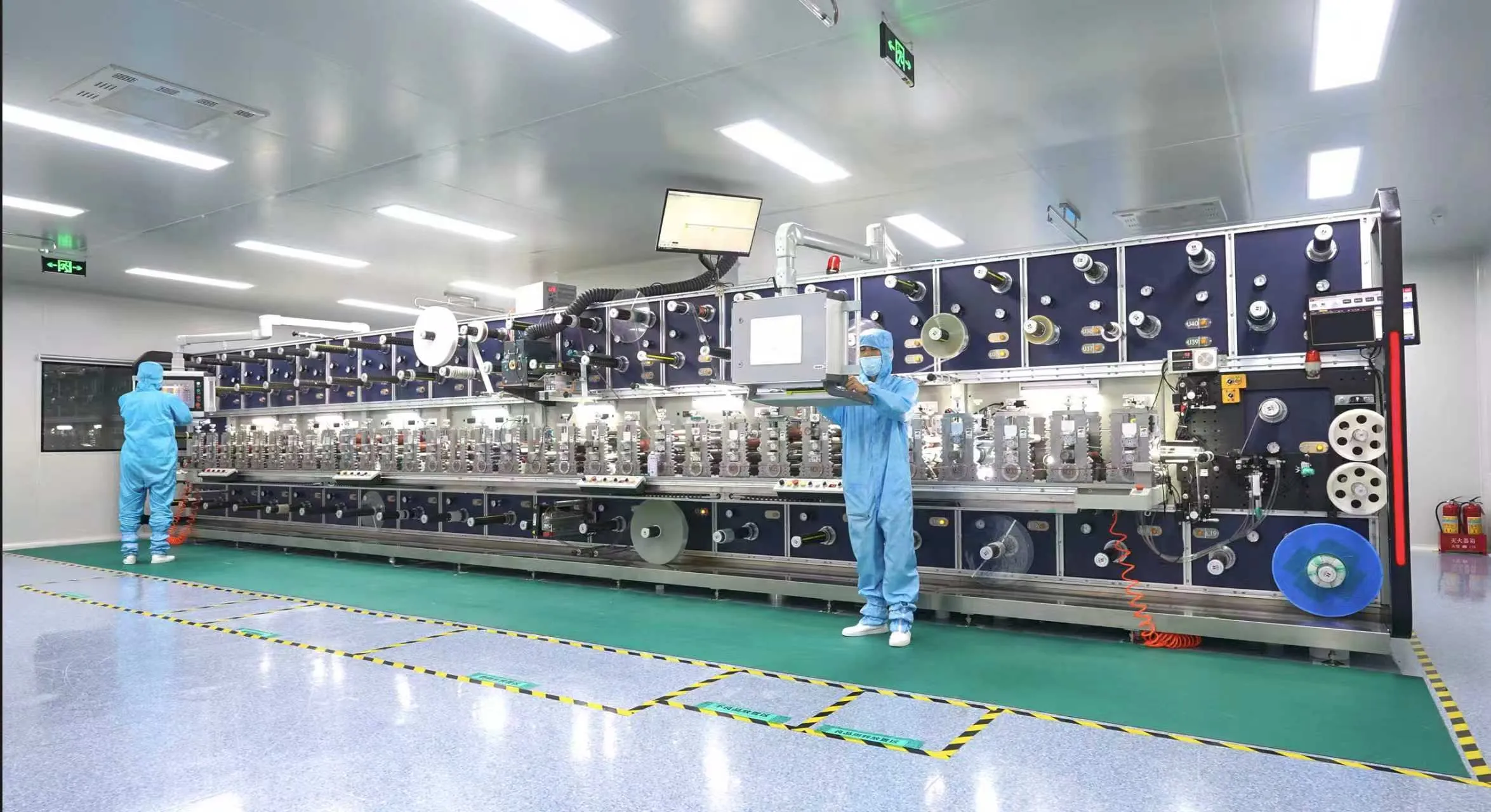
Medical device components — from CGM patches to BGM spacer tapes — require tolerances that general industrial die cutters simply cannot achieve. A misaligned die cut of even 20 micrometers can compromise a sensor's accuracy, affect adhesive performance, or cause device failure. That is why working with a specialist precision die cutting manufacturer is essential.
The right manufacturer also brings engineering expertise that can improve your design, reduce material waste, and accelerate time-to-market. They understand cleanroom converting requirements, material behavior, and regulatory documentation.
Key Capabilities to Evaluate
| Capability | What to Look For | Why It Matters |
|---|---|---|
| Rotary Die Cutting | High-speed, tight tolerance (±10 µm or better) | Commercial production volumes |
| Flatbed Die Cutting | Precision for lower volumes and thick materials | Prototyping and short runs |
| Laser Die Cutting | Tool-free, rapid turnaround | Complex shapes, prototypes |
| Lamination | Multi-layer adhesive bonding | CGM patches, diagnostic strips |
| Precision Slitting | Narrow width tape slitting | Component width control |
| Cleanroom | ISO Class 7 or 8 | Medical-grade production |
Quality System & Certification
A serious custom medical die cutting partner must operate under a certified quality management system. Key certifications include:
- ISO 13485: The global standard for medical device quality management.
- 21 CFR Part 820: FDA Quality System Regulation, required for US market entry.
- ISO 10993: Biocompatibility testing standards for materials contacting skin or bodily fluids.
- CE Marking / MDR: EU Medical Device Regulation compliance for the European market.
Experienced medical die cutting service providers will readily provide documentation.
Die Cutting Technologies Compared
| Technology | Tolerance | Speed | Best For |
|---|---|---|---|
| Rotary Die Cutting | ±10-20 µm | High (30-100 m/min) | High-volume production |
| Flatbed Die Cutting | ±25-50 µm | Medium | Thick materials, prototypes |
| Laser Cutting | ±50-100 µm | Medium (tool-free) | Complex shapes, rapid prototyping |
| Digital Cutting | ±100-200 µm | Low-Medium | Very short runs |

Materials They Should Handle
- Medical acrylic and silicone adhesive tapes
- Polyurethane (PU) and PET films
- Medical foams (PE, PU, silicone)
- Hydrocolloids and nonwoven fabrics
- Hydrophilic membranes for diagnostics
- Release liners (PET, paper, siliconized)
Our material solutions page details the full range of medical-grade materials we convert.
Questions to Ask Your Manufacturer
- What is your tightest die cutting tolerance on your production equipment?
- Do you have on-site cleanroom capacity, and what class?
- Can you provide device master file (DMF) references?
- What is your typical lead time from art approval to first articles?
- Do you offer rapid prototyping with digital or laser cutting?
- Can you support packaging and assembly in-house?
- What is your process validation (IQ/OQ/PQ) capability?
- How do you handle engineering changes and change control?
Frequently Asked Questions
What is the minimum order quantity for custom medical die cutting?
MOQs vary by process. Prototypes may start at 100-500 pieces using laser or digital cutting. Rotary production typically requires 5,000-10,000 pieces to justify tooling.
How long does it take to make custom die cutting tooling?
Rotary die tooling typically takes 2-4 weeks. Flatbed dies take 1-2 weeks. Laser and digital cutting require no tooling, enabling same-week prototypes.
Can a medical die cutting manufacturer handle full assembly?
Many qualified converters offer turnkey services including lamination, kiss cutting, matrix stripping, pouch packaging, and sterilization.
How do I get a quote for medical die cutting?
Provide your component drawing, material specification, annual volume estimate, and any regulatory requirements. Visit our contact page to request a quote.
Leetoya is a specialist medical die cutting manufacturer with cleanroom converting, ISO 13485 certification, and end-to-end adhesive component production. Contact us for your next project.