Table of Contents
- What Is a CGM Adhesive Patch?
- Key Materials Used in CGM Patches
- Manufacturing Process Overview
- Compliance & Quality Requirements
- How to Choose the Right Manufacturer
- Cost & Timeline Expectations
- Frequently Asked Questions
As continuous glucose monitoring (CGM) adoption accelerates worldwide, demand for high-quality CGM adhesive patch manufacturers has never been higher. Whether you are developing a new wearable sensor or seeking a qualified CGM overpatch supplier, understanding the manufacturing landscape is critical to your product's success. This guide walks you through everything you need to know.
What Is a CGM Adhesive Patch?
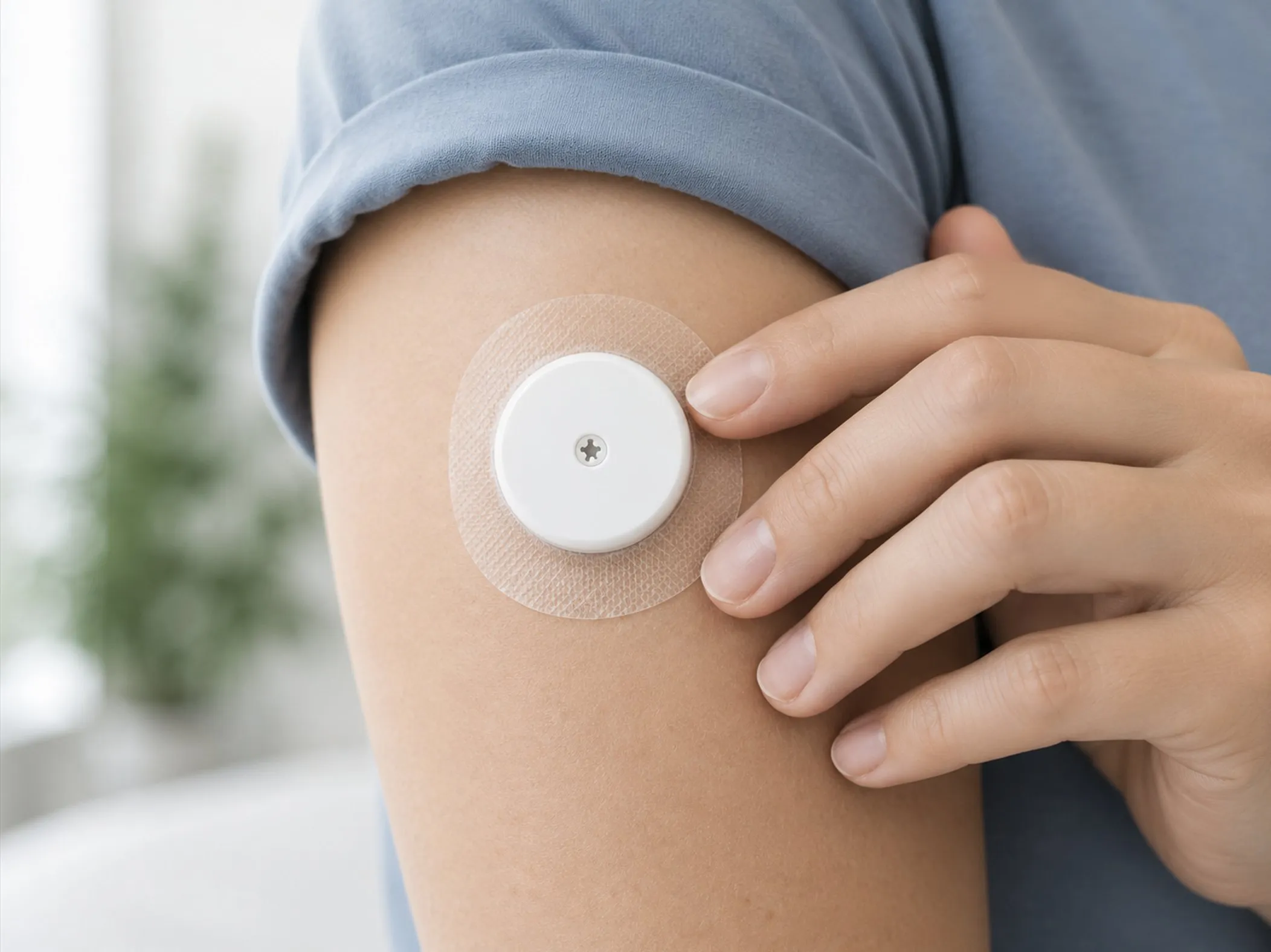
A CGM adhesive patch is a medical-grade fixation component that secures a continuous glucose monitor sensor to the patient's skin. These patches must maintain reliable adhesion for 7 to 14 days (or longer for extended wear systems), allow the sensor to transmit accurate readings, and protect the adhesive from moisture, sweat, and daily movement. They are a critical part of diabetes monitoring device components.
Unlike standard bandage adhesives, CGM patches require a multi-layer construction: a skin-contact adhesive layer, a carrier film or foam layer for cushioning, a breathable top film, and often a release liner. The precision with which these layers are die cut and laminated directly affects sensor accuracy and patient comfort.

Key Materials Used in CGM Patches
Material selection is one of the most important decisions when working with a custom CGM adhesive patch manufacturer. The choice of adhesive, carrier, and top film determines wear time, breathability, and skin compatibility.
| Material Category | Common Types | Key Benefits | Best For |
|---|---|---|---|
| Medical Acrylic Adhesive | 3M 1504, 3M 9874, Henkel Loctite | High tack, long wear, skin-safe | Extended wear (7-14 days) |
| Silicone Adhesive | Dow SILASTIC, Scapa | Gentle removal, hypoallergenic | Sensitive skin patients |
| Polyurethane (PU) Film | 3M Tegaderm-type, Covestro | Breathable, water-resistant | Top cover layer |
| Medical Foam | PE foam, polyurethane foam | Cushioning, shock absorption | Sensor protection |
| Hydrocolloid | Coloplast, ConvaTec | Moisture management | Wound-adjacent applications |
For a deeper dive into available material options, explore the full range of medical adhesive material solutions available from experienced converters.
Manufacturing Process Overview
Professional medical die cutting manufacturers produce CGM patches through a controlled, multi-step process:
- Material Lamination: Adhesive, carrier film, and release liner are precisely bonded under controlled temperature and pressure.
- Die Cutting: The multi-layer laminate is precision-cut to the exact sensor footprint using either cleanroom rotary die cutting or flatbed methods.
- Kiss Cutting & Matrix Stripping: Excess material is removed while the patches remain on the release liner.
- Quality Inspection: Each batch undergoes visual inspection, dimensional verification, and adhesion testing.
- Packaging & Sterilization: Patches are packaged in medical-grade pouches, often with ethylene oxide (EtO) sterilization.

For projects requiring rapid prototyping before full production, many manufacturers offer rapid prototyping services that can deliver custom patch samples in days rather than weeks.
Compliance & Quality Requirements
A reputable CGM adhesive patch manufacturer must operate under strict quality systems. When evaluating potential partners, verify the following certifications:
| Certification/Standard | Purpose | Why It Matters |
|---|---|---|
| ISO 13485 | Medical device QMS | Ensures consistent quality across production |
| 21 CFR Part 820 | FDA QSR | Required for US market entry |
| ISO 10993 | Biocompatibility testing | Confirms skin safety |
| Class II Cleanroom (ISO 7/8) | Controlled manufacturing environment | Minimizes particulate contamination |
| CE Marking (MDR 2017/745) | EU regulatory compliance | Required for EU distribution |
Understanding cleanroom converting capabilities is especially important, as CGM patch production typically requires ISO Class 7 or 8 environments to meet medical device standards.
How to Choose the Right Manufacturer
Selecting a CGM adhesive patch manufacturer is a high-stakes decision. Consider these factors:
- Experience with CGM/BGM devices: Look for a partner with a proven track record in wearable medical device components, not just general die cutting.
- In-house material engineering: The manufacturer should have engineering support for material selection, prototype iteration, and design optimization.
- Cleanroom capability: Verify on-site cleanroom capacity and whether it can scale to your projected volumes.
- Regulatory support: Can the manufacturer provide documentation for FDA 510(k) submissions, technical files, and change control?
- End-to-end service: From packaging and assembly through to final sterilization, a full-service partner simplifies your supply chain.
Cost & Timeline Expectations
CGM patch development and production costs vary significantly based on complexity, material specification, and order volume. Typical timelines include:
- Prototype phase: 1-3 weeks for initial samples using rapid prototyping methods.
- Design iteration: 2-4 weeks for material and design refinements based on wear testing.
- Tooling: 2-6 weeks for custom rotary die or flatbed tooling.
- First production run: 4-8 weeks after design freeze, including validation.
- Ongoing production: 2-4 week lead time for repeat orders at commercial volumes.
For companies also producing insulin pump adhesive components, consolidating manufacturing with a single qualified partner can reduce both cost and regulatory burden.
Frequently Asked Questions
What is the typical wear time for a CGM adhesive patch?
Most CGM patches are designed for 7 to 14 days of continuous wear. Extended-wear patches (14+ days) use high-tack acrylic adhesives and PU film covers. Silicone-based patches are gentler but may need earlier replacement. Your manufacturer can recommend the right balance based on your device's sensor lifetime.
Can I get custom-shaped CGM patches for my unique sensor design?
Yes. Precision die cutting allows manufacturers to produce custom shapes, sizes, and patterns tailored to your specific sensor footprint. Custom CGM adhesive patches can include features like tab pulls, finger-lift edges, and sensor window cutouts. Use rapid prototyping to test multiple shapes before committing to production tooling.
What is the minimum order quantity for CGM patches?
MOQs vary by manufacturer and material. Prototype runs may start at 500-1,000 pieces. Commercial production typically requires 10,000+ pieces per run, though some manufacturers offer lower MOQs for mid-volume clients. Discuss your volume projections upfront during supplier selection.
Are CGM patches sterile or non-sterile?
It depends on your device's regulatory classification. Many CGM patches are supplied non-sterile with instructions for use, while some customers request EtO or gamma sterilization. The manufacturing partner should support both approaches and provide appropriate packaging options.
How do I ensure my CGM patch manufacturer meets FDA requirements?
Verify ISO 13485 certification, request a copy of the quality manual, and confirm the manufacturer's experience supporting FDA submissions. A qualified partner will provide device master file (DMF) references, biocompatibility documentation, and process validation reports. For more information, visit our about page or contact our engineering team.
Looking for a qualified CGM adhesive patch manufacturer? Leetoya provides precision die cutting, cleanroom converting, and full-service adhesive component manufacturing for CGM and wearable medical devices. Request a quote today.